By Beverly Andrews
It can often feel that, for the queer community, the battle for equality has been largely fought and won, with over thirty countries now legalising same-sex marriage. This even includes former right-wing strongholds like Chile, and as a result, the future can appear bright.
And yet, if you look closely, there is cause for concern — particularly in the world’s three superpowers: China, Russia, and America.
In China, after displaying a degree of tolerance toward its queer community, the government now appears to have changed course. Authorities have launched a national crackdown, permanently shutting down many university LGBTQI social media platforms.
In Russia, civil liberties are under full-scale assault. This once-authoritarian nation is now rapidly descending into totalitarianism, closely aligning itself with the largely homophobic Russian Orthodox Church. Members of Russia’s queer community are leaving — not only in response to the country’s invasion of Ukraine but also out of fear over how far the government is willing to go to silence all alternative voices.
In America, a country that, only six years ago, seemed on the brink of a more tolerant era, progress now appears to be reversing. The nation is in the process of rolling back abortion rights, and many activists fear that the current wave of legal attacks on the trans community foreshadows a broader assault on the rights of the entire queer population.
In this climate, it is heart-warming to see the BFI Flare Film Festival return for its first in-person event in two years — a beautiful celebration of queer lives from around the world. Below are some of my personal favourites.
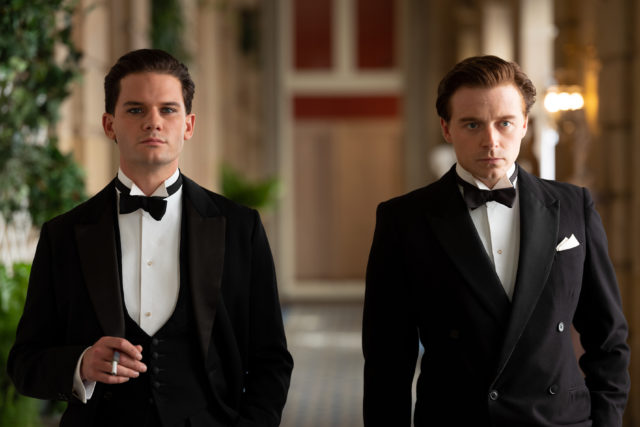
Benediction is Terence Davies’ beautiful tribute to World War I poet Siegfried Sassoon. The film explores both his struggle as a gay man at a time when homosexuality was illegal, as well as his harrowing experience of the war.
After the war ends, feeling the need to conform, Sassoon marries a woman with whom he has a child, remaining with her until her death. Yet, the film poignantly captures his deep unhappiness — not simply the result of having to hide his sexuality, but also due to his untreated survivor’s guilt, something that plagued many soldiers who returned from that devastating conflict.
Visually sublime, the film features a dazzling central performance by Jack Lowden as the young, hopeful Sassoon, with Peter Capaldi portraying his older, deeply disillusioned self.
Although Benediction highlights the immense difficulty faced by gay men of that generation in living openly and honestly, it becomes clear that what ultimately broke Sassoon was not merely society’s intolerance, but the fact that he survived the war. His body returned, but his mind was forever haunted.
At a time of unprecedented violence in Ukraine, this film serves as a stark reminder of the true human cost of conflict.
Jimmy in Saigon is a moving documentary that follows a brother’s search for the true cause of his older brother’s death in Saigon — and, in doing so, attempts to uncover who his brother really was. Directed by Peter McDowell, the brother of the film’s title character, Jimmy in Saigon is, in many ways, as much a ghost story as it is a documentary. It follows Peter’s emotional journey as he chases the lingering shadow of his long-dead brother.
McDowell’s search takes him to Vietnam — the country where his brother, Jimmy, had fought during the American war, but, more intriguingly, the place Jimmy chose to return to after his tour of duty ended. Vietnam was not only the country where Jimmy lived after the war, but also the place where his life tragically ended.
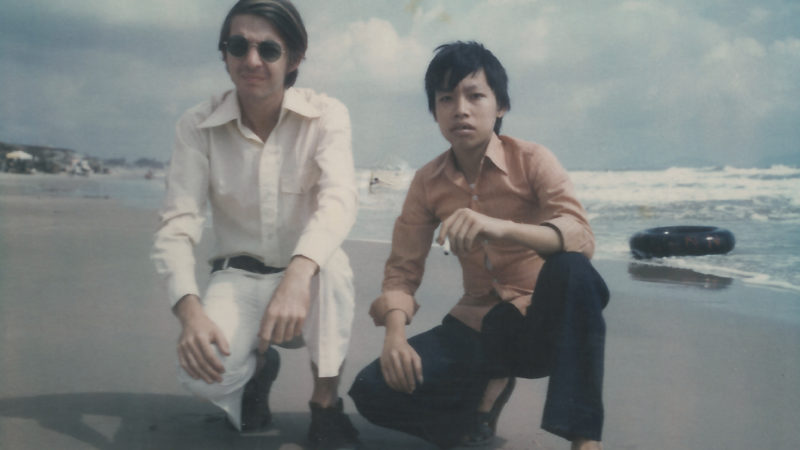
Along this journey, we meet the Vietnamese sister of Jimmy’s close male friend — a friend who, many now assume, was Jimmy’s lover. The man to whom Jimmy returned, and the person who never forgot him after his death. The film later reveals that this man himself died not long after Jimmy, in what the film delicately suggests was the result of a broken heart.
In this beautifully shot documentary, McDowell may not find all the answers or solve every mystery surrounding his brother’s life and death. But he does succeed in forging a deep emotional connection with him. And, as a gay man, McDowell emerges from this journey feeling far less isolated than before — discovering, it now seems, that his brother was gay too.
Invisible: Gay Women in Southern Music is a powerful documentary that highlights one of the great ironies of American music: despite country music being among the most conservative musical genres in the world, much of it is written by queer women.
The documentary explores the reality that many of these immensely talented songwriters dream of solo careers, yet fear that the very audiences they write for would reject them if the truth about their sexuality were known. As a result, they remain largely anonymous to their fans, their identities hidden behind the songs that shape the soundtrack of Southern culture.
Wet Sands is a beautifully crafted feature from Georgia, directed by Elene Naveriani, that delicately explores a deeply buried mystery — the suicide of the lead character’s grandfather.
When Moe, the film’s central character, returns to her grandfather’s home in a conservative village on the Black Sea coast, she finds a community determined to cling to its secrets. The villagers are unwilling to speak about her grandfather’s death, preferring silence to uncomfortable truths.
It is only through Moe’s quiet persistence that the complexities of her grandfather’s life begin to surface — including the existence of a male lover, devastated by the loss, just as Moe is.
Money Boys, from China and directed by C.B. Yi, explores a rarely discussed phenomenon: the lives of the country’s rent boys — young men, often from China’s vast rural communities, who migrate to its bustling cities in search of financial security, and perhaps, love.
The film follows the gentle and introspective Fei as he struggles to navigate this complex emotional and social landscape, caught between economic necessity, cultural expectations, and the longing for genuine human connection.
Wildhood, a First Nations coming-of-age love story, stands as my personal favourite. It follows the story of Link, a troubled First Nations teenager, who does everything he can to protect his younger half-brother from the violent abuse of their father.
One night, Link stumbles upon a collection of hidden birthday cards from the mother he had long been told was dead. This discovery sets him on a road trip with his younger brother — a journey not only to find their mother, but also to find himself.
Beautifully written and directed by First Nations filmmaker Bretten Hannam, a proud member of Canada’s Mi’kmaq community, Wildhoodis a tender, informed exploration of identity, belonging, and the awakening of first love.
SHORT FILMS
Baba, directed by Naman Gupta, tells the story of a young Libyan boy desperate to leave his homeland, only to discover that he is far more loved than he ever imagined.
Tender and quietly powerful, the film explores the complexities of identity, belonging, and the unexpected ways love can reveal itself, even in the most difficult circumstances.
And Then, directed by Ravenna Tran, is a delightful and tender exploration of how a simple midnight walk can lead to a life-changing encounter.
With quiet charm and emotional subtlety, the film captures the magic of unexpected connection and the small, serendipitous moments that can alter the course of a life.
A Fox in the Night, directed by Keeran Anwar Blessie, is a charming short film that highlights how opposites can, indeed, attract. Through its thoughtful storytelling, the film explores the unexpected connections that can blossom between people from different walks of life.
Taken together, these films present a complex, deeply humane portrait of the global queer experience — a landscape that those who choose to hate would do well to witness.
Twitter: @BeverlyAAndrews