By Beverly Andrews
If Sundance — with film icon Robert Redford at its helm and its focus on the environment and Indigenous rights — represents America’s liberal West, then its younger sibling, Tribeca, co-founded by screen legend Robert De Niro and known for its gritty, urban storytelling, is undoubtedly the face of America’s metropolitan East Coast.
This year’s edition, like film festivals around the world, has had to adapt to the realities of a post-pandemic world. Fortunately for audiences everywhere, Tribeca has retained its digital component, offering an impressive selection of films accessible to journalists and cinephiles across the globe.
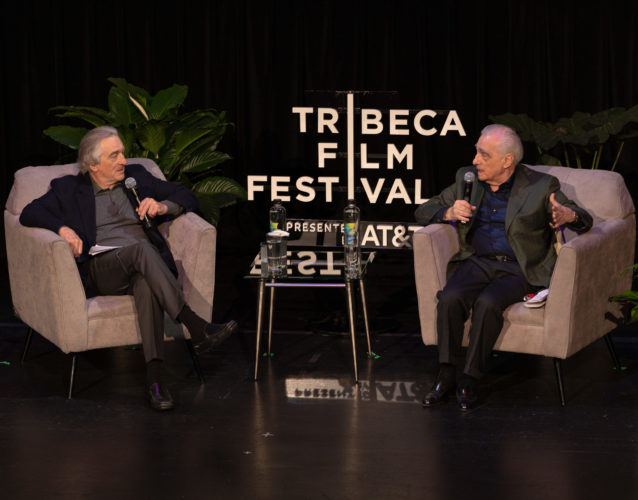
Robert DeNiro & Martin Scorsese
Here are some of the standout films — both features and documentaries — from the festival’s online program:
By Beverly Andrews
If Sundance — with film icon Robert Redford at its helm and its focus on the environment and Indigenous rights — represents America’s liberal West, then its younger sibling, Tribeca, co-founded by screen legend Robert De Niro and known for its gritty, urban storytelling, is undoubtedly the face of America’s metropolitan East Coast.
This year’s edition, like film festivals around the world, has had to adapt to the realities of a post-pandemic world. Fortunately for audiences everywhere, Tribeca has retained its digital component, offering an impressive selection of films accessible to journalists and cinephiles across the globe.
Here are some of the standout films — both features and documentaries — from the festival’s online program:
Features
A sharp, darkly funny feature from Israel, Karaoke explores the restless lives of a middle-aged couple stuck in the rut of their marriage. Both feel trapped by routine and quietly long for change. Enter their new neighbour, an enigmatic man with a fondness for throwing loud, late-night karaoke parties, much to the dismay of their building’s residents.
After the couple calls to complain, they are surprised when the neighbour invites them over. Reluctantly, they accept — and step into a world that feels entirely foreign. Their suave, flamboyant neighbour, accompanied by his glamorous transgender girlfriend and considerable wealth, embodies everything their own lives lack.
But as the neighbour becomes more entwined in their world, cracks in their marriage deepen. Under his influence, they begin to change — though not necessarily for the better — and suddenly, they see each other through far more critical eyes.
Director Moshe Rosenthal crafts a clever, unsettling tale that keeps the audience guessing: is the neighbour’s influence liberating or quietly corrosive? The film suggests the truth lies somewhere in between, offering a cautionary reminder that we should be careful what we wish for.
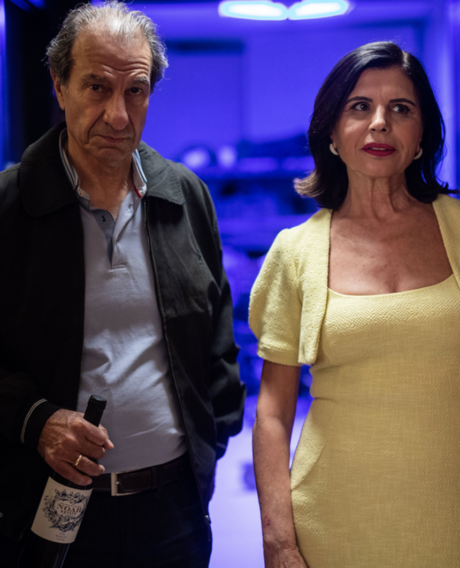
A Matter of Trust is a quietly powerful drama that weaves together several seemingly unrelated narratives, all exploring the fragile nature of human connection.
A teenage boy, unwillingly outed by his classmates, turns to a sympathetic teacher for support. An Afghan family faces forced repatriation to their unstable homeland, despite the moral unease of the doctor escorting them. A couple, attending a friend’s funeral, realise their lives feel uninspired — prompting the husband to reinvent their image. A mother appears to be fleeing with her daughter, though it remains unclear whether she is protecting the child or hiding her own sins. And finally, two married individuals rent an Airbnb to begin an affair.
Though these stories seem disconnected, they converge around the same existential question: what does it truly mean to care for someone else? Is selflessness even possible, or do we inevitably fall back into protecting our own interests? Director Annette K. Olesen delivers a thought-provoking, nuanced film that lingers long after its closing scene.
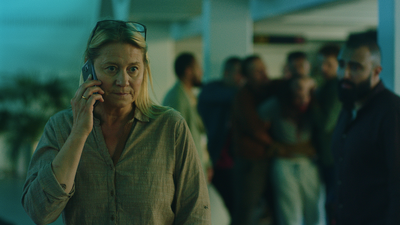
From India comes Two Sisters and One Husband, a quietly provocative exploration of love, family, and societal expectation. The film follows Rajat, who falls in love with one sister but, under family pressure, marries the other. His life quickly descends into chaos, complicated further when the first sister discovers she is pregnant.
Seeking escape from the suffocating web of societal norms, the trio relocates to a remote Himalayan village, where Rajat hopes they can build a different kind of family — one that defies traditional labels.
Though not all narrative threads tie together perfectly, Two Sisters and One Husband raises compelling questions about love, duty, and the boundaries of family. Its quiet provocations and emotional complexity resonate long after the credits roll.
The Documentaries
While Tribeca’s features were strong, it was the documentaries that truly stood out this year — raw, insightful, and deeply human. Here are a few highlights:
Tiu offers a playful, intimate portrait of Icelandic indie-pop band Of Monsters and Men as they celebrate their ten-year anniversary with a new album. Hailing from the same windswept homeland as Björk, the band members prove to be warm, engaging, and wonderfully quirky company throughout the film’s breezy 49-minute runtime.
Viewers are treated to everything from surreal dream interpretations to impromptu performances aboard a boat sailing past Iceland’s hauntingly beautiful frozen landscapes. By the time Tiu ends, it’s hard not to wish for more time with the band — a testament to their infectious charm and enduring creativity.
Lakota Nation vs The United States is a powerful and deeply moving documentary that explores the long, fraught relationship between the U.S. government and one of the country’s largest Indigenous nations. At its heart is the Lakota people’s ongoing struggle to reclaim the Black Hills — their sacred ancestral lands, which today are also home to Mount Rushmore, a monument that, for many, stands as both a symbol of American pride and a painful reminder of broken promises.
The film lays bare a shameful history of treaties signed, violated, and abandoned — a devastating pattern that speaks to the systemic mistreatment of Native Americans as a whole. It offers a crucial, often overlooked perspective on U.S. history — one that is essential to understanding the country’s present-day social and political landscape.
For anyone seeking to grasp the historical roots of recent Indigenous activism, including the Standing Rock protests, this thoughtful and unflinching documentary is essential viewing.
An engrossing and unexpectedly candid portrait of one of tennis’s most iconic figures, McEnroe charts the legendary player’s ascent to the top of the sport, while peeling back the layers of personal turmoil that shadowed his success.
John McEnroe offers striking honesty as he reflects on his career, his strained relationship with his father and manager, and the emotional toll of life under constant public scrutiny. The film becomes not just a sports documentary, but a fascinating character study of a man whose professional triumphs were mirrored by emotional unraveling — and who ultimately found redemption in an unexpected second act.
Hailing from Detroit my personal favourite would have to be…
A blistering, high-energy dive into the true origins of Techno music, God Said Give Em’ Drum Machines reclaims Detroit as the genre’s creative and cultural birthplace.
Anyone doubting Techno’s continued relevance need only look at Beyoncé’s Break My Soul to see its grip on dance floors remains strong. But this film takes viewers back to where it all began — Detroit’s underground scene — tracing the music’s journey through New York’s gay clubs with DJ Larry Levan, before following its global expansion to London and Berlin.
The documentary makes it clear: Techno wasn’t born in Germany, but in the clubs of Black Detroit. It introduces viewers to the pioneering visionaries — Juan Atkins, Derrick May, Kevin Saunderson, Blake Baxter, Eddie Fowlkes, and Santonio Echols — whose raw, groundbreaking beats sparked a worldwide movement.
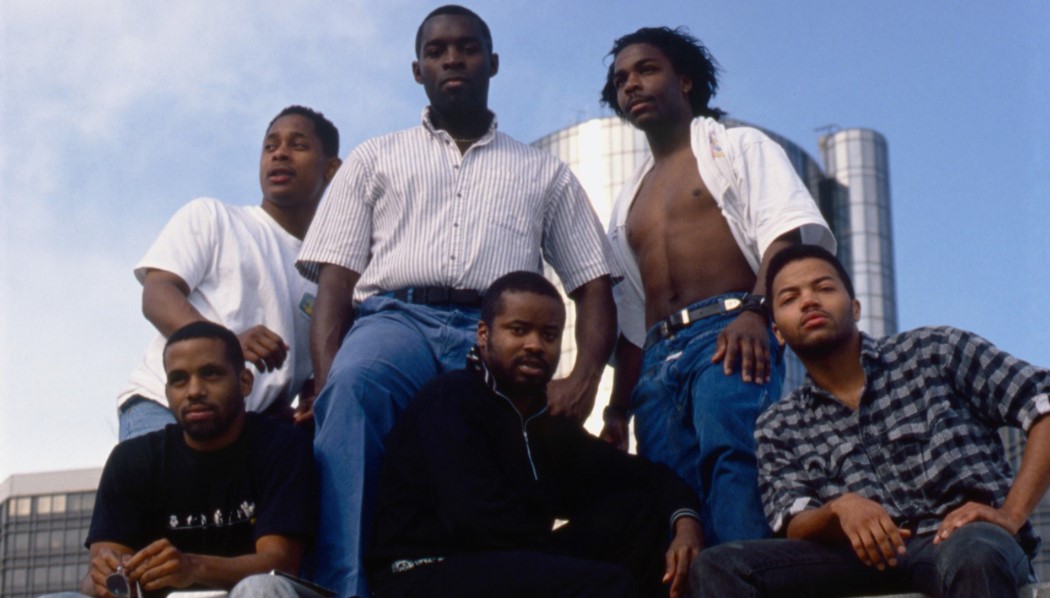
Yet the film doesn’t shy away from the pitfalls of fame: mismanagement, broken friendships, and personal struggles haunt their legacy. Directed by Detroit natives Kristian R. Hill and Jennifer Washington, and ten years in the making, this documentary is an essential celebration of Techno’s roots and its ongoing cultural significance.
The film’s final moments — Derrick May performing with the Detroit Symphony Orchestra to a motionless crowd that explodes into dance the moment the bass kicks in — perfectly encapsulate Techno’s enduring, electrifying power.
All in all, Tribeca 2022 was an enormous artistic and creative success. With its diverse lineup of bold features and riveting documentaries, the festival not only showcased the best of contemporary cinema but also reaffirmed a hopeful truth: film is back — and it’s thriving.