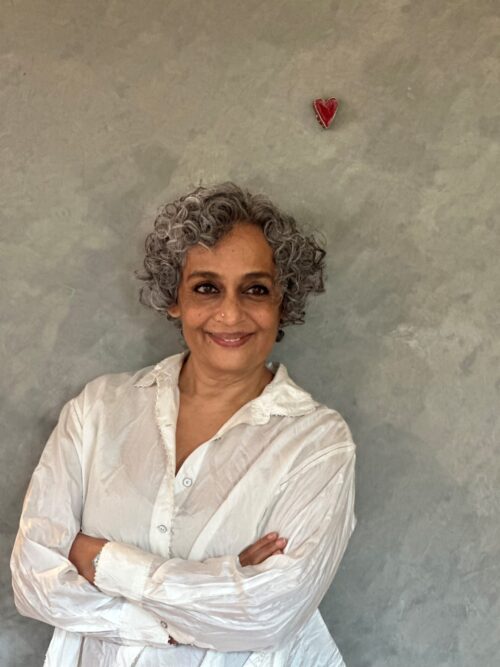
When Arundhati Roy stepped on to the stage at the Brighton Dome she was greeted with an ovation that would normally be expected for a popstar or a Hollywood A lister. She appeared to be moved as she touched her hand to her heart, but in that moment I thought, she must be used to this adoration.
I have also admired Arundhati Roy ever since I heard that, after winning the Booker Prize for A God of Small Things, she didn’t lock herself away to write the dreaded second book. Instead she lived a life that would feed her writing for when she was ready. She spent time with the community in India who were campaigning against the Narmada Dam and became a voice for them, even ending up in prison for a day after, ludicrously, being accused of trying to kill a man with her scarf. In 2010 she spent what she describes in her book as “some of the most intense weeks of my life” with the Naxalite guerrillas, a communist group living in the Dandakaranya forest in Central India. She wrote a small book called Walking with the Comrades after this experience.
Her public adoration is, unfortunately, matched by a very public hatred from some circles in India. She is not afraid to speak up against any inequalities and is certainly not towing the Modi line. This puts her in a precarious position in her homeland as some people openly want her killed. Her fame has both been the cause of this danger and her protector. When she talked about her experiences with the law courts in India, the host of the evening in Brighton said “If they lock you up, we will all fight for your freedom”, this was met by great support from the audience. It is clear that there would be a public uproar if something were to happen to her which hopefully will make those that shout against her think twice.
She dedicates her Memoir, Mother Mary comes to Me, to her mother, with whom she had an extremely difficult relationship. But despite this she writes with humour and compassion, almost thanking her mother for being so horrendously unmaternally inclined, as it may have contributed to who Arundhati, whose Christian name was actually Susan, is now.
I enjoyed having Arundhati as a companion as I read her memoir. She said at the Dome in Brighton, where she came to publicize her book, that she wanted to lead a writer’s life, rather than lock herself away and write. She has certainly led a fascinating and brave, if not always understandable life. She is an inspiration and a shining example of someone who has not only survived, but thrived under a lifetime of hardship. I too will applaud her enthusiastically next time I hear her speak, not only for her incredible work as a writer, but for who she is.
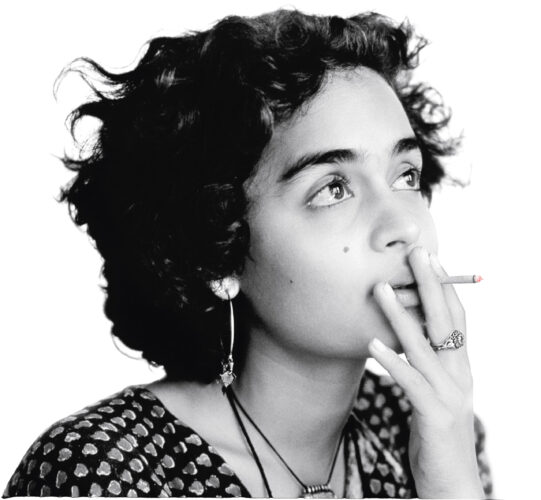
Cover picture: Arundhati Roy – Credit Carlo Buldrini