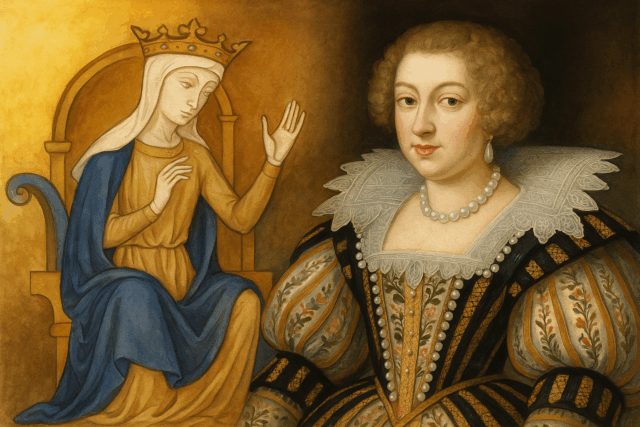
By Claudio Sales Palmero
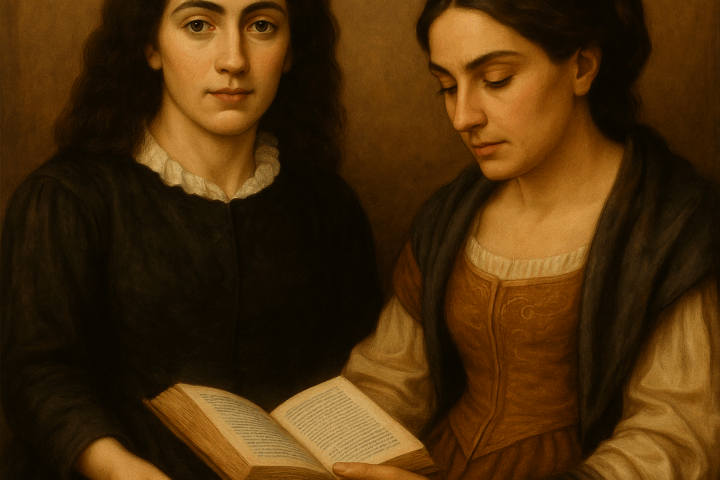
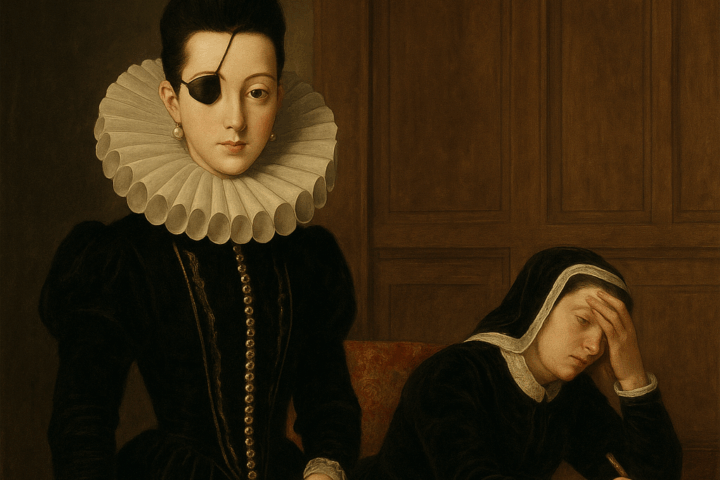
Mothers of two famous kings—Louis IX, the Saint, and Louis XIV, the Sun King. Both had to confront the great nobles of the kingdom and impose their authority upon them.
Blanche was the daughter of Alfonso VIII of Castile and Eleanor of Plantagenet. Her maternal grandmother was Eleanor of Aquitaine, and due to this family connection with both England and France, she became a key figure in the Treaty of Goulet, which sought to end the wars between the Plantagenets and the Capetians—clarifying each family’s rights to the thrones of France and England and to various fiefs. The marriage between Blanche, niece of John Lackland of England, and the future Louis VIII of France was intended to seal this treaty.
A trouble dynastic marriage and political chessboard
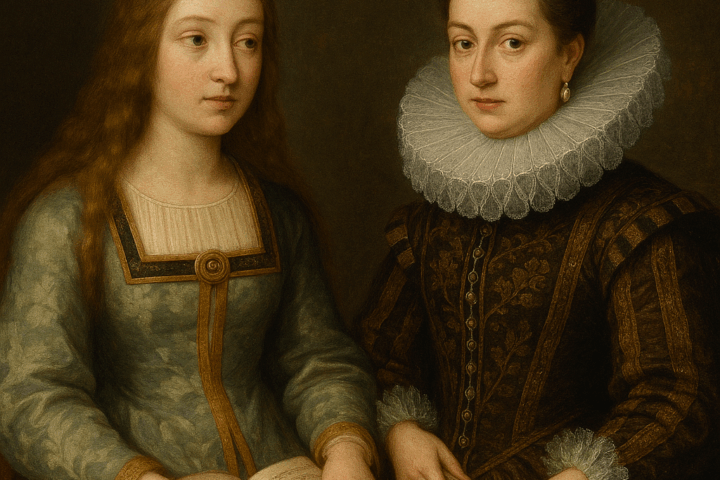
Originally, her older sister Urraca was to be chosen for the marriage, but the matters between England and France were so delicate that, in the winter of 1199–1200, the already octogenarian Eleanor of Aquitaine traveled to Castile to meet her granddaughters and select the most suitable one. Eleanor chose Blanche, believing she would adapt better to the French court—and she was right.
The Treaty of Goulet did not have a lasting effect, and Blanche’s husband continued to claim the English throne offered to him by a faction of the English nobility. Blanche supported him in his campaigns, organizing reinforcements and managing the government in his absence. Besides the conflicts with England, France faced in the south the rebellion of the Albigensians, a heresy that had gained strength in Languedoc with the support of the local nobility. Louis VIII’s campaign there was brilliant for his interests, though not decisive, and he died on his return—of dysentery—after only three years of reign, in 1226.
Regent in crisis
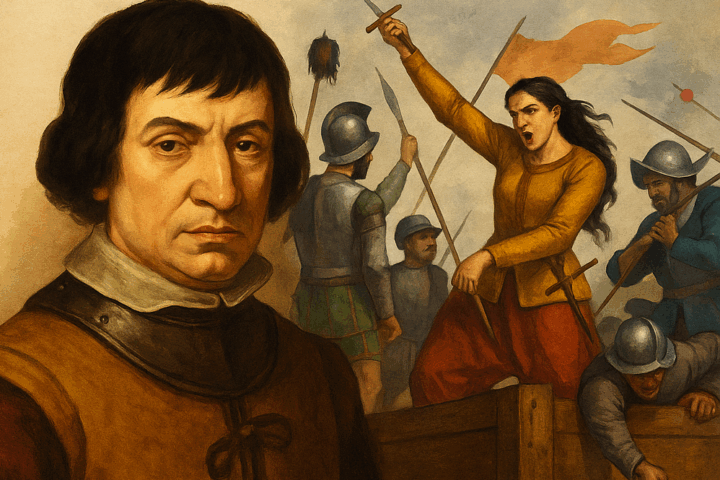
It was then that Blanche of Castile fully revealed herself as a strong ruler. Her regency over her son Louis IX was questioned by most of the great nobles of the kingdom. With the support of a few loyal followers and the people of Paris, she gradually won over part of the rebels and finally subdued the rest with the royal army in 1229. She also had to deal with tensions with England and with the Albigensians. As the king’s mother, she chose the best tutors for him, and she herself instilled religious values and respect for the Church—traits that would be decisive for the only French king ever canonized, who was considered a saint even during his lifetime.
Mother of a saint-king
In 1234 or 1235, at the age of 20 or 21, Louis IX was declared mature enough to reign, but he kept his mother as his advisor.height=”20px”]In 1248, Louis set out on a crusade against his mother’s advice, and she once again assumed the regency, gathering the kingdom’s human and financial resources for her son’s enterprise but keeping peace in France during very difficult times.height=”20px”]Blanche died in 1252 while Louis was still on crusade; it is said that he remained silent for two days upon hearing of her death.

Anne of Austria, daughter of Philip III of Spain, exemplifies how personal interest intertwined with state affairs within royalty. While she was queen consort of France under the regency of Marie de’ Medici, and later queen consort in her own right but without having provided an heir, her loyalty to France was questioned—and with good reason. But when she became, at 37, the mother of the future king of France and then assumed the regency after her husband’s death, forming a highly effective partnership with Cardinal Mazarin, she collaborated tirelessly in elevating France to the status of a European superpower, culminating in the apotheosis of Louis XIV.
Her son would later say that she deserved to be remembered not only as one of France’s greatest consorts, but also as one of its greatest “kings.” Yet until the crucial moment when she gave birth to the heir of France, all signs pointed to the opposite.
A troubled marriage and political suspicion
She married Louis XIII of France in 1615, at the age of 14. The queen mother and regent, Marie de’ Medici, forced the consummation of the marriage to prevent any possibility of annulment. Louis XIII was a young man of complex character, and many historians believe he was likely homosexual—or at least clearly uninterested in women, whether in the marital bed or their company. The marriage was a complete mismatch, and the king’s successive favorites had to pressure him into fulfilling the basic requirement of producing an heir.
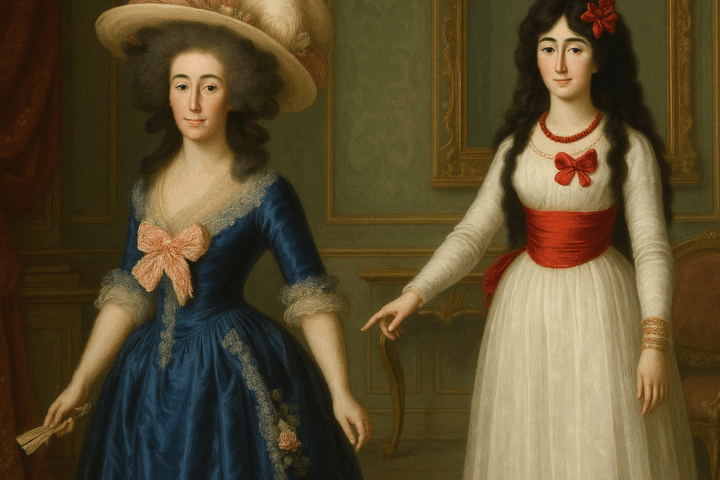
During Marie de’ Medici’s regency, Anne maintained a small Spanish court within the French one, followed Spanish fashions, and spoke poor French. All this would end after Louis XIII’s coup in 1617 against his mother and her favorite, Concino Concini. The new favorite, the Duke of Luynes, forced changes in Anne’s entourage and habits and attempted—without much success—to bring the young couple closer together. Among the new French ladies selected for the queen was the Duchess of Chevreuse, with whom Anne formed a close relationship that led her to conspire against her husband’s favorite and even in favor of Marie de’ Medici’s return.
These intrigues, together with the so-called Buckingham Affair—magnified and immortalized by Alexandre Dumas in The Three Musketeers—deepened the rift in the royal marriage. In 1625, envoys from the English and French courts met in Amiens to celebrate the marriage of Charles I of England to Henrietta Maria, Louis XIII’s sister. There, Anne met the Duke of Buckingham, Charles I’s favorite, and according to rumors and later memoirs from several present, there was a romantic encounter between them. The rumors spread through Europe’s courts, humiliating Louis XIII, who then forbade Buckingham from ever setting foot in France again.
After the Duke of Luynes died, he was replaced by Richelieu—a brilliant statesman committed to strengthening the monarchy and the state against the nobility, and concerned about France’s position with two active fronts against the Habsburgs, north and south. He thus favored war with Spain, which was finally declared in 1635. Anne of Austria remained loyal to her brother, Philip IV of Spain, against France’s new policy, violating the marriage agreements through a compromising correspondence. Amid rumors and accusations, an investigation was opened, ending with the queen’s confession, the seizure of her correspondence, and the constant surveillance of her ladies.
The birth of an heir against all odds
It is surprising that at precisely this moment of great tension between the spouses, in 1638—at age 37 and after 23 years of marriage—Anne finally gave birth to an heir, and two years later, to a second son.
These births brought immense relief to the crown and elevated Anne’s status, though they did not improve the marital relationship. Richelieu died in 1642, and Louis XIII, only a few months later, in 1643. On his deathbed, Louis XIII resisted leaving the regency in his wife’s hands, but finally agreed after appointing a regency council he trusted.
Nevertheless, the new regent, with the support of the Parliament of Paris, managed to alter the regency council in her favor, nullifying her husband’s will and elevating Cardinal Mazarin as prime minister. Louis XIII, through his will, had wanted to continue Richelieu’s work of strengthening royal power, while the Parliament—by annulling it—wished to prevent such concentration of authority. This was a grave miscalculation.
Mazarin, the Fronde, and the consolidation of power
The new ruling pair—Anne of Austria and Mazarin—who, judging from period rumors and their correspondence, were very likely lovers, would prepare, with extraordinary coordination, the final blow to the dispersion of power. They confronted the Parliament of Paris and the high nobility in a series of major revolts known as the Frondes, and instilled in Louis XIV his obsession with controlling the entire apparatus of the state.
Upon Mazarin’s death in 1661, Louis XIV decided to rule alone, without favorites, choosing his advisors personally and also sidelining his mother from power.
Anne of Austria died in 1666 from breast cancer—one of the earliest cases for which diagnosis and progression are known.

Blanche of Castile and Anne of Austria lived in different centuries, under different political pressures, yet their stories reveal a shared legacy: the remarkable ability of royal women to shape the destiny of France. Both arrived as foreign princesses, both faced suspicion and resistance, and both eventually assumed the full weight of governance during times of crisis. Through intelligence, resolve, and political acumen, they defended the authority of the crown and secured the future of their sons—Louis IX, the saintly king of the Middle Ages, and Louis XIV, the monarch who ushered France into its golden age. Their regencies not only stabilized the kingdom but also transformed the monarchy itself, proving that power in France was not shaped by kings alone. Blanche and Anne stand as enduring examples of how women, often underestimated or sidelined, played decisive roles in the making of European history.