Iraqi War Drama Brought Powerfully to the Stage
By Beverly Andrews
At a moment when the human cost of political conflict is once again impossible to ignore, Absent—Betool Khedairi and Penny Black’s adaptation of Khedairi’s acclaimed Iraqi novel—feels sharply relevant. Set in the aftermath of the first Gulf War, as sanctions tighten and daily life grows more precarious, the play focuses on a single Baghdad apartment block to illuminate the truth of the African proverb: when the elephants fight, the grass gets trampled.
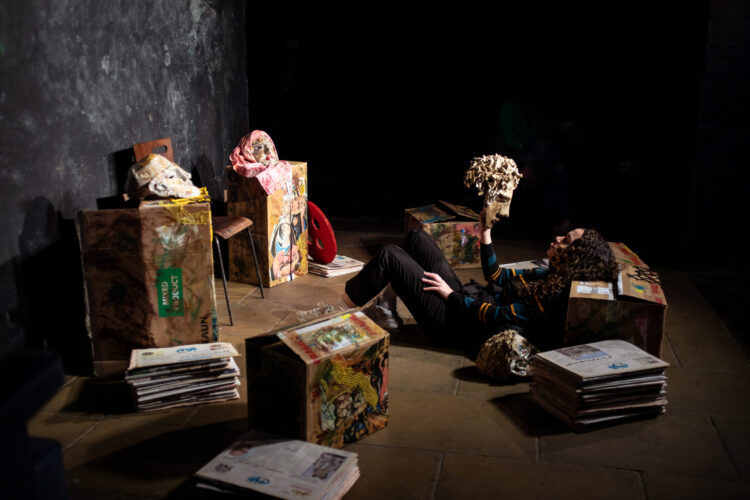
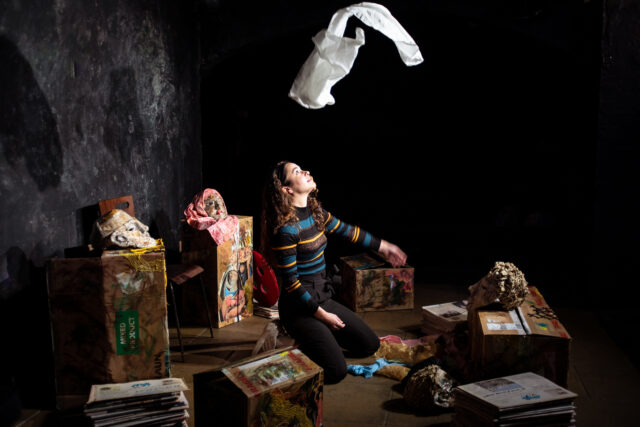
The story unfolds through the eyes of Dalal, a young woman orphaned when her parents’ car struck an unexploded land mine. Raised by her aunt and uncle, she now lives with them in a cramped building filled with vividly drawn neighbours: Umm Mazin, a fortune-teller dispensing homemade remedies; Saad, a loyal hairdresser trying to keep his few remaining clients; Ilham, a determined nurse; and a mysterious newcomer with whom Dalal becomes romantically entangled. Despite the dual pressures of war and sanctions, each resident tries to hold onto the rhythms of ordinary life.
Like a Chekhov ensemble, the characters in Absent are defined by longing—not for a distant place, but for a time before conflict reshaped their existence. Dalal’s aspirations are modest and universal: to study, to fall in love, to imagine a future. Yet in post-war Iraq these simple hopes become fraught. People begin to disappear, neighbours turn inward, and even the bees her uncle tends behave strangely, mirroring the unease settling over the community.
Khedairi’s novel weaves together multiple perspectives, but the adaptation wisely centres Dalal. Through her, we experience both tenderness toward her neighbours and deep disappointment as some falter under the strain. Sanctions corrode trust, people compromise their values, and the foundations of community begin to crumble. In its atmosphere of surveillance, suspicion, and eroding integrity, Absent recalls the tone of East German theatre and film produced before the fall of the Berlin Wall.
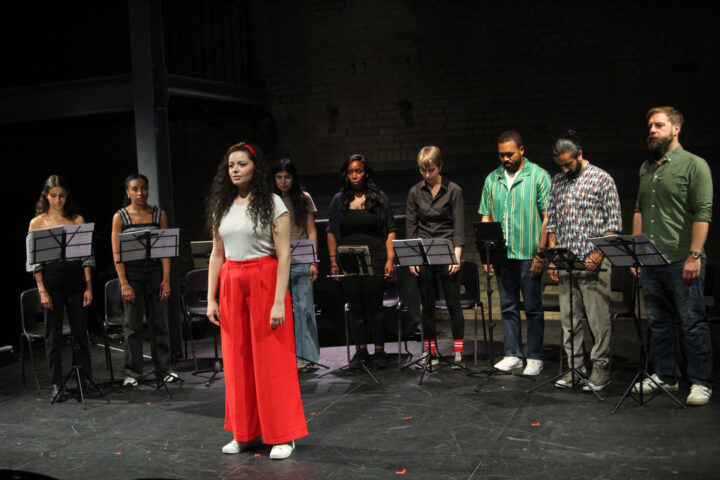
Svetlana Dimcovic’s direction is precise and humane, guiding a cast anchored by Hiba Medina’s powerful portrayal of Dalal—a performance that captures both the character’s youthful hope and the quiet devastation that follows. The production also underscores how Iraqis became victims twice over: first under Saddam Hussein’s brutal regime, and then under the destabilising effects of foreign intervention, which would eventually contribute to the conditions that enabled the rise of ISIS.
Presented this autumn as part of the Voila Festival, Absent is an exquisitely crafted work that leads audiences beyond political headlines and into the intimate daily realities of ordinary Iraqis. It reminds us that their desires mirror those of people everywhere—but that their lives have been repeatedly reshaped and unsettled by forces far beyond their control.