By Beverly Andrews
Perhaps one of the friendliest film festivals in the world, the British Film Institute’s London Film Festival returned this autumn with its usual wonderful blend of potential Oscar winners, international gems, and indie surprises. It is a festival celebrated less for its glamour and more for its accessibility—an accessibility that endears it to film fans from around the world.
Below are some of my festival favourites.
DECISION TO LEAVE
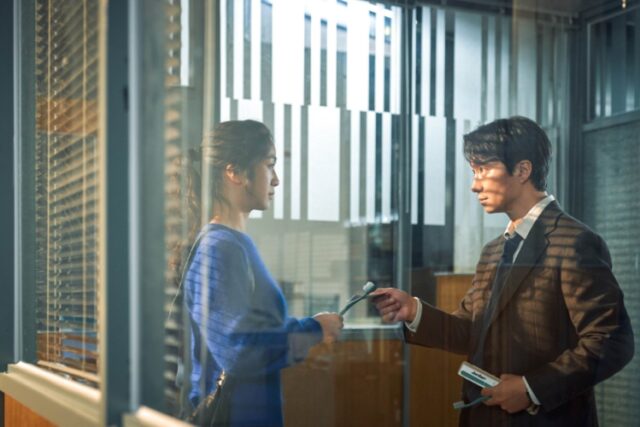
Decision to Leave, by South Korean director Park Chan-wook, is a dreamy film noir that pays homage to British filmmaker Alfred Hitchcock while also standing as something genuinely unique. The story centers on Hae-Joon, an insomniac and obsessive detective who, on one level, appears to be happily married but, deep down, knows something is missing in his life.
Enter the mysterious widow of a homicide victim. Though visibly shaken by her husband’s death, she doesn’t behave as a grieving widow might be expected to. Could it be because she played a role in his murder?
Park Chan-wook’s film is an instant classic. We watch, captivated, as the interaction between the detective and the widow unfolds in completely unexpected ways—leaving us to wonder who is ultimately in control. A haunting delight.
TILL
Till, directed by Chinonye Chukwu, examines a crime that, for many, has come to define race relations in 1950s America—the brutal murder of African American teenager Emmett Till at the hands of white supremacists in the South. What made Till’s death stand out—especially in an era when the killings of Black Americans often went unnoticed—was the unwavering determination of his mother, Mamie Till, to seek justice and expose the truth.
She insisted on recovering her son’s body, which had been dumped in a river, and chose to hold an open-casket funeral. Her goal was clear: to show the world the horrific extent of the torture inflicted on her son. Emmett Till’s only alleged “crime” was that he had whistled at a young white woman—an accusation now deeply in doubt, as Emmett had a speech impediment that sometimes made him sound as though he were whistling.
The harrowing images from the funeral were picked up by the international press, sparking outrage and helping to ignite the modern civil rights movement. Historians now regard Mamie Till’s courageous act as a pivotal moment in American history.
Premiering at the Mayor of London’s Gala during the festival, American-Nigerian director Chinonye Chukwu’s film is a powerful indictment of America’s violent, racist past—a past that, as former President Trump’s rhetoric has often reminded us, still lingers today.
1976
1976 is an extraordinary Chilean feature, directed with fierce conviction by Manuela Martelli. Set during the early years of General Pinochet’s military dictatorship, the film explores a dark chapter in Chilean history—a regime now officially accused of causing the deaths of at least 2,279 people (a figure many human rights organizations say is far higher), torturing over 30,000 others, and forcing nearly one million citizens into exile.
Pinochet’s reign of terror extended beyond Chile’s borders; his security forces allegedly tracked down and assassinated critics of the regime abroad. The emotional scars left by this era are still deeply felt today, particularly among younger generations who continue to ask: how could this have been allowed to happen? Martelli’s film offers a powerful and thought-provoking response.
At the heart of the story is Carmen, an upper-middle-class woman married to a doctor, living a comfortable bourgeois life. She chooses not to see the horrors unfolding around her. In the film’s opening scene, Carmen is out shopping. As police whistles and gunfire echo outside, and someone is heard running, the shopkeeper calmly closes the shutters and continues serving her. When Carmen exits the store, she notices a single shoe abandoned on the ground—its owner now vanished.
Her insulated life is upended when she’s asked to shelter a wounded student activist being hunted by the authorities. This moment marks a turning point, forcing her to confront the brutal reality faced by everyday Chileans. As she tries to help the young man escape, the people she turns to for assistance begin to disappear, one by one.
1976 underscores a chilling truth: authoritarian regimes endure not only through violence but through the complicity of those who choose to look away. As the film powerfully suggests, once people begin to open their eyes, such regimes become vulnerable. Unlike many other dictatorships, Pinochet’s regime was not toppled by force. Believing he would win, and under intense international pressure—including from the Pope—Pinochet agreed to a referendum to extend his rule by eight more years. To his astonishment, he lost. When he turned to the military to help him retain power, they refused. Chile was finally able to begin its transition to democracy.
Martelli’s film focuses on the beginning of this era of repression—when many Chileans, especially those who benefitted from the regime, were content to turn a blind eye. 1976 is a haunting and essential exploration of how silence and denial enable tyranny.
SUBTRACTION
Subtraction, directed by Canadian-Iranian filmmaker Mani Haghighi, is perhaps one of the most unusual films of the entire festival. Viewers expecting Haghighi to make an overt political statement about current events in Iran may be disappointed at first glance. And yet, upon closer inspection, the film’s political undertones become unmistakably clear.
It’s a difficult film to review without spoiling its many surprises, but the basic premise follows a female driving instructor who, during a lesson, sees a man she believes to be her husband exiting another woman’s apartment. Assuming the worst, she abruptly ends the lesson and rushes to confront him. Instead, she finds a woman who looks exactly like her—only far happier.
From this doppelgänger setup, Haghighi leads us through a series of unexpected and suspenseful twists. Subtraction is also notably the second film in the festival to show clear influence from British director Alfred Hitchcock.
Beneath its psychological thriller exterior, the film seems to pose deeper questions about life in contemporary Iran: if you subtract basic freedoms, can anyone truly be happy? Through its narrative and eerie atmosphere, the film quietly delivers a powerful commentary on societal repression.
Haghighi had planned to attend the film’s European premiere at the festival but was prevented from boarding his flight—reportedly due to fears that he would voice support for Iran’s youth-led protest movement. In the end, the government needn’t have bothered. His film speaks volumes, without him needing to utter a single word.
As this year’s BFI London Film Festival demonstrated, cinema remains one of the most powerful tools for storytelling, resistance, and reflection. Whether through the haunting elegance of Decision to Leave, the raw emotional weight of Till, the political resonance of 1976, or the surreal yet incisive world of Subtraction, these films remind us that art can illuminate hidden truths, challenge complacency, and provoke necessary questions. In a world that often feels fractured, festivals like this continue to offer a vital space where voices from around the globe converge—not just to entertain, but to engage, disrupt, and inspire.