By Beverly Andrews
Despite rising Covid infections in the United Kingdom, the country is attempting a return to a degree of normalcy. An indication of this is the return of the capital’s renowned BFI London Film Festival. It is a film festival, which unlike many of its rivals, focuses not just on industry insiders, but also those who genuinely love cinema. Below is a roundup of some of this year’s gems shown over the fortnight.
***
THE HARDER THEY FALL
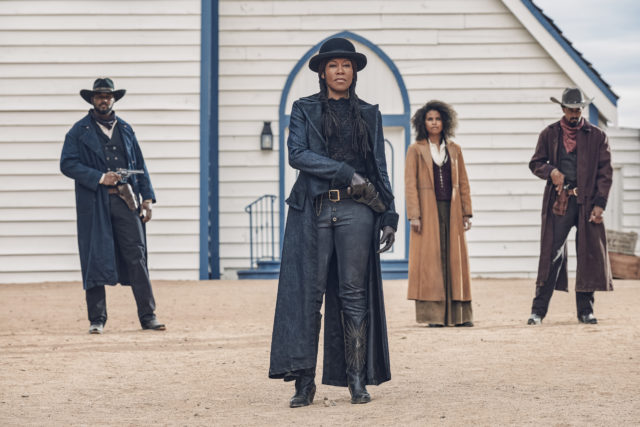
This is a film which is a blistering, violent, but also thought-provoking western which highlights the fact that many of the cowboys who rode the range were indeed black. Directed by Jeymes Samuel and starring an illustrious cast, which includes Oscar winner Regina King, the illustrious Idris Elba and Jonathan Meyers. This revisionist drama seeks to redress a gap in how America’s history is often depicted and in the process has a great deal of fun. Not for the faint hearted, The Harder They Fall is definitely worth the cost of admission.
SEDIMENTS
Sediments is exactly the kind of film which viewers go to film festivals to see. The film is a Spanish documentary which looks at the lives of a group of transgender women, who gather together to celebrate the birthday of the youngest, Magdalena. The group of five Trans women travel to Magdalena’s small village where she lives with her adoring and completely accepting parents. The film shows the gender, age and political differences which exist within the group but also highlights the things which bind them together. With a beautiful heart-warming conclusion, Sediments suggest that rural communities just might be more tolerant then we often think. Sediments also seeks to show that the trans community is not an ideological mass group but a community very much made up of individuals with their own unique personalities.
BANTU MAMA
Is the latest in a series of films, which looks at the reality of economic migration from Africa. In Bantu Mama, the central character, Cameroonian Emma, played by Clarisse Albrecht who is also the film’s co-writer, is a drug trafficker who finds herself a prisoner on the Caribbean island of the Dominican Republic, in its capital Santo Domingo. An interesting location for the story since it was a key port of the trans-Atlantic slave trade.
Emma, en-route to prison, is involved in a serious car crash which kills all the police officers who are riding with her but leaves her injured but alive. She is found by a young girl, the daughter of an imprisoned drug lord. The girl, who has two other siblings, takes Emma home. Once there Emma finds herself now occupying the role of their surrogate mother.
The film does not pull its punches in highlighting the desperate poverty these children face, as well as how their environment offers few opportunities outside the drug trade. The girl who found Emma gives her a simple choice, which is in exchange for taking her youngest brother away, who she fears will also end up in a life of crime, she will help her return to her native home.
Bantu Mama makes a powerful statement, which is that often the countries refugees escape to end up offering them far worse conditions than what they left behind. And no matter how difficult things are in their native homes, it’s far better to remain and find some way to carve out a future.
THE GRAVEDIGGERS WIFE
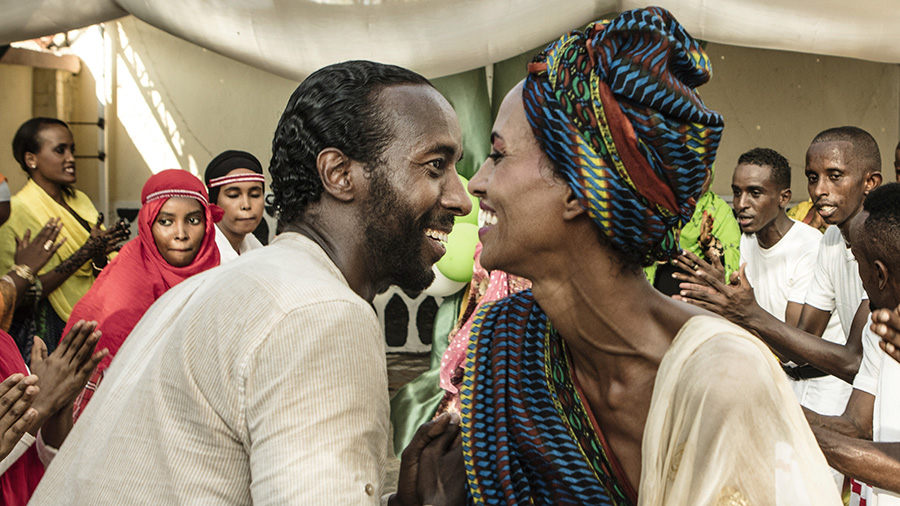
A personal favourite would be The Gravedigger’s Wife. A beautiful lyrical portrait of a devoted, loving married couple. Their life is torn apart when the wife is diagnosed with kidney failure. The film charts her husband’s desperate search to find the money to pay doctors who can save his wife’s life. Although the film is clear in charting the almost impossible economic odds the husband faces, its primary focus is simply on their unbreakable love.
MUNICH: THE EDGE OF WAR
This is an adaptation of Robert Harris’ Second World War thriller. It is a film which has perhaps surprising contemporary, relevance in a genre which is often critically dismissed. The film focuses on the much maligned British Prime Minister Neville Chamberlain and three young friends, two German and one British who meet at Oxford, their friendship is though tested by the war.
Paul Hartman, played by Janis Niewohner, is a Nazi sympathiser who sees the party as restorative force for German national pride after the disaster of World War 1, despite having a much more politically astute Jewish girlfriend, Lenya played by Liv Lisa Fries. While Paul idolizes the Nazi party, Lenya tries to persuade him to the reality of what they are but he refuses to listen. George McKay plays Hugh Legat, the final member of this trio, a British student with political ambitions who is content to just accept the status quo. The film moves forward in time to the eve of Second World War, where their lives have dramatically changed. Paul has now awakened to the horrors the Nazis present and is willing to do anything to stop them.
Lenya, being Jewish, is already a victim of their brutality and Hugh Legat is an assistant to the sitting prime minister Neville Chamberlain. He will now be forced to choose between his career ambitions and his moral compass when Paul passes to him a communiqué which clearly points to the fact that Hitler had no intention of fulfilling his promise to not invade a fellow European country.
Munich shows how easily patriotism can be used as a political weapon and in the process mask something far darker. Paul, an early Nazi supporter completely changes to someone who believes the only way to secure a peaceful future for Germany is to assassinate the Führer. Paul though worried about his career prospect is reluctant to become involved, meanwhile Chamberlain is presented as a man who may have been far more pragmatic and intelligent than those living at the time would have given him credit for. With countries throughout the world embracing elements of the far right, Munich: Edge of War could be seen as a warning of what happens when we fail to learn the lessons of the past.
ALI AND AVA
The final film in this round up is a charming, unusual love story. It’s a story which highlights the possibility of love across both the gulf of age and race.
Ali played brilliantly by Adeel Akhbar is a Asian man/child from a middle class British Asian family. Ali used to be a successful DJ but now is a genial landlord to several east European tenants, living in his family’s many properties.
Ava – a beautiful understated performance from a Mike Leigh alumnae: Claire Rushbrook – on the other hand, is a white working class woman of Irish descent, who is a survivor of a brutal first marriage, with several children and grandchildren, she has somehow managed to rebuild her life as a teacher’s assistant. The two meet, fall in love and try to find a way to sustain a relationship in this racially polarised city.

The film not only celebrates the possibility of love in mid-life but also highlights a couple who seek in a bitterly divided city to bridge of understanding and cross the racial divide.
This year’s festival, with its return to public screenings, feels like a lovely welcome back, along with being a reminder of the undiminished power of cinema.
form-idea.com London.
November 12, 2021