By Claudio Sales Palmero
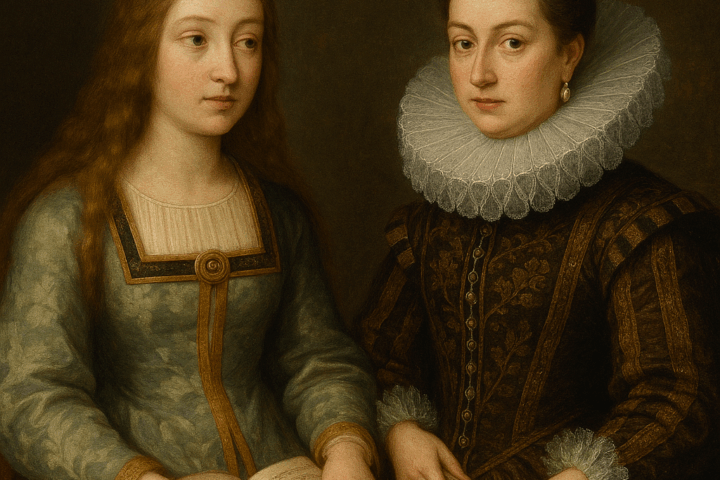
In the grand narrative of Spanish history—dominated for centuries by kings, conquistadors, and clerics—the voices of powerful women have often been relegated to the margins. Yet some women, through force of intellect, political ambition, and sheer defiance, stepped boldly into the center of events. Two such figures were María Pacheco and Ana de Mendoza, Princess of Éboli.
Separated by a generation but united by a shared refusal to accept the roles prescribed to them, these women became central players in two of the most dramatic episodes of 16th-century Spain. Pacheco, a noblewoman and learned strategist, took up arms in the wake of her husband’s execution and held an entire city against the Crown. Ana de Mendoza, famed for her beauty and intellect, became embroiled in courtly intrigue that reached the very heart of Philip II’s reign.
Both risked everything in defense of ideals, alliances, or personal ambition—and both paid a steep price. Far from passive figures, they were political actors in their own right, navigating treacherous power structures in a world that allowed them little margin for error.
What follows are the stories of two women who conspired, resisted, and led—only to be undone by the very forces they sought to master. Their legacies endure not only as cautionary tales, but as powerful testaments to agency, courage, and the costs of defiance.
Ana de Mendoza, Duchess of Francavilla and Princess of Mélito, Princess Consort of Éboli (Cifuentes, 1540 – Pastrana, 1592)
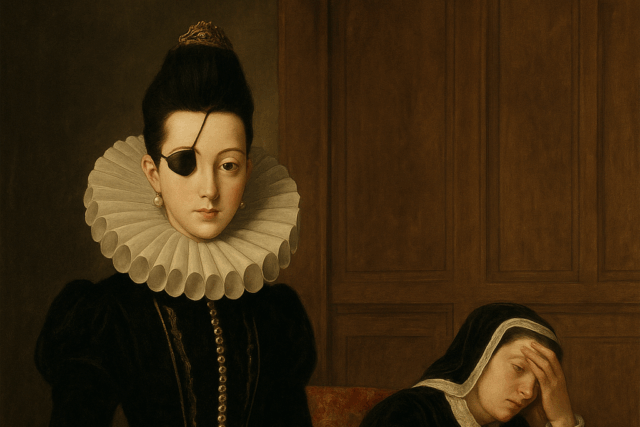
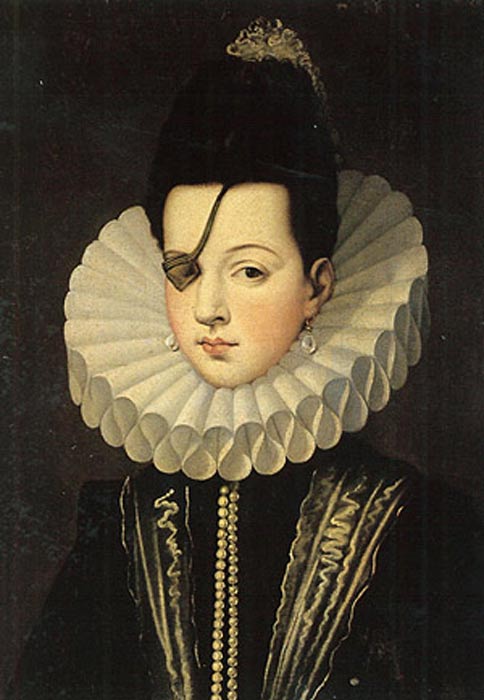
Ana de Mendoza—better known by her title, the Princess of Éboli—has long captured the imagination of Spanish historians and novelists alike. Famed for her striking beauty, undiminished by the enigmatic patch she wore over her right eye, and remembered for her fiery disputes with Saint Teresa of Ávila, Ana’s life at court was marked by intrigue, power plays, and ultimately, lifelong imprisonment in her palace at Pastrana.
The reason for her eye patch has long been debated. While some claim it was the result of a fencing accident, others speculate it was worn to hide a squint. However, no definitive explanation is found in contemporary documents.
Ana hailed from the powerful House of Mendoza. On the advice of King Philip II, she married Rui Gómez de Silva—a Portuguese nobleman of modest standing but a childhood friend and favorite of the king. Their union catapulted them to the heights of political influence. Rui was granted the title of Prince of Éboli and came to lead the Ébolist faction, which advocated for a negotiated peace in Flanders. This placed them in direct opposition to the Albists, led by the Duke of Alba, who preferred military repression of the Flemish rebellion. Ironically, while the Ébolists wanted peace in Flanders, they supported war with England—unlike the Albists, who favored peace across the board.
Rumors swirled that Ana had once been the lover of King Philip II, a theory fueled by the king’s contradictory behavior—at times protective, at others cold and vindictive. Notably, he ensured her children’s advancement even after Ana was imprisoned and stripped of her estates and guardianship. Still, some historians reject the idea of a romance, citing Philip’s profound love for his wife, Isabel of Valois.
After her husband’s death in 1573, Ana sought refuge in a Carmelite convent she had founded in Pastrana. Yet, even in the cloister, she found conflict—most notably with Teresa of Ávila. Ana tried to impose her own rules on the order, and it took the intervention of her late husband to broker a truce between the two strong-willed women.
Initially, Ana attempted to follow the order’s strict rule, but she quickly abandoned convent life for a more worldly existence. She moved into a house on the convent grounds, retained her luxurious wardrobe and jewels, and came and went as she pleased. In protest, Teresa relocated the nuns to Segovia, leaving Ana and her ladies-in-waiting behind.
Ignoring the king’s advice to remain in Pastrana, Ana returned to court, where she filed a denunciation of Teresa’s autobiography with the Inquisition—a move that placed the saint in serious jeopardy.
Back at court, Ana developed a close relationship—likely romantic—with Antonio Pérez, the king’s secretary and a central figure in the Ébolist faction. Pérez oversaw Spain’s foreign relations with England, Flanders, and France. The pair became entangled in a web of political conspiracies so sensitive that many documents were likely destroyed or never created.
In 1579, Pérez was arrested, and Ana was detained the very next day. She would never regain her freedom. Among the accusations against her were the sale of state secrets for personal gain, attempts to turn the king against his half-brother, Don John of Austria (then governor of Flanders), and conspiracy to thwart the king’s claim to the Portuguese throne.
The final straw for Philip II appears to have been his belief that Ana and Pérez had manipulated him emotionally in matters concerning Don John. The pair allegedly ordered the assassination of Juan de Escobedo, Don John’s secretary, fearing he knew too much. While the king initially protected Pérez—and some historians suggest he may have been complicit in the crime—everything changed upon Don John’s death that same year. When his body and private correspondence arrived in Madrid, Philip ordered the arrest of the conspirators and the destruction of Don John’s letters, which reportedly affirmed his loyalty to the king.
Antonio Pérez eventually escaped and died impoverished in Paris. Ana de Mendoza, once one of the most powerful women at court, spent the rest of her life under house arrest in her palace at Pastrana. Legend has it she was allowed to look out the window for only one hour each day.
María López de Mendoza y Pacheco (Granada, 1497 – Oporto, 1531)
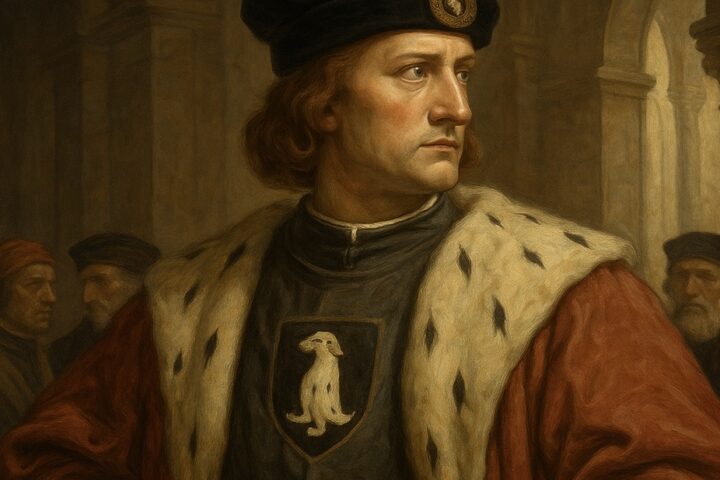
María López de Mendoza y Pacheco—who chose to go by her mother’s surname, María Pacheco, to distinguish herself from her sisters—is remembered as one of the most striking figures of early 16th-century Spain. Known to some as “the last of the Comuneros”, she played a pivotal role in the Revolt of the Comuneros, a major uprising in the Kingdom of Castile against the rule of Emperor Charles V (Carlos I of Spain).
She was born in Granada, where her father, Íñigo López de Mendoza y Quiñones, served as the governor of the Alhambra. Coming from an influential noble family, María received an exceptional education for a woman of her time, mastering Latin, Greek, mathematics, and poetry.
In 1511, at the age of fourteen, she married Juan de Padilla—a nobleman of lower rank—who inherited from his father the position of Captain of the Men-at-Arms of Toledo. In 1518, the couple settled in that city.
The political climate shifted dramatically following the death of Ferdinand the Catholic in 1516. Although Queen Joanna of Castile (Juana la Loca) was still alive, she was considered unfit to rule due to her mental health, and her son Charles—born and raised in Flanders—was proclaimed king of Castile and Aragon. When Charles arrived at the Cortes of Valladolid in 1518, he barely spoke Spanish and was surrounded by Flemish advisors, arousing the suspicion and hostility of the Castilian elites.
Tensions boiled over in 1520 when Charles increased taxes to fund his bid for the Holy Roman Empire. This sparked a widespread revolt known as the Comuneros’ Uprising. María Pacheco supported—and may have actively encouraged—her husband to join the rebellion. The movement gained traction in many of Castile’s major cities, aiming to curtail the influence of foreign courtiers and reclaim local governance.
While Juan Padilla led troops in the field, María Pacheco governed Toledo in his absence, first alone and later in collaboration with Bishop Acuña of Zamora. She proved to be an adept and determined leader.
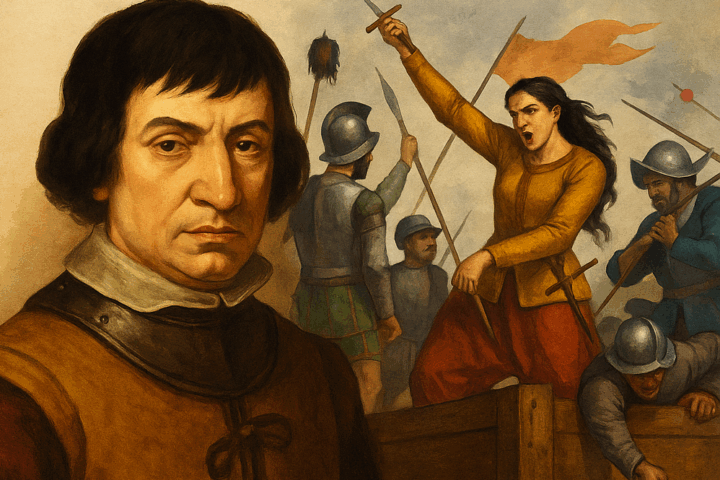
The tide turned against the rebels in 1521, when the royalist forces defeated the comuneros at the Battle of Villalar. Juan Padilla, along with fellow leaders Juan Bravo and Francisco Maldonado, was captured and beheaded. Upon receiving the news, Bishop Acuña fled—but María Pacheco stood firm. She organized the defense of Toledo, ordered the fortification of the city and the Alcázar, confiscated silver from the cathedral, sold her own jewels to fund the garrison, and maintained strict order throughout the siege.
A simultaneous revolt in Navarre delayed the royalist assault, and for nine tense months Toledo held out. When the siege finally came, the city endured for two months before capitulating—but negotiated favorable terms that allowed it to retain its arms and a measure of local control.
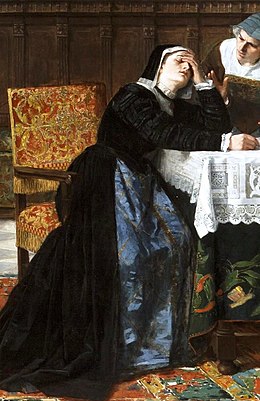
Unwilling to surrender, María Pacheco rallied a second uprising, seizing the Alcázar and freeing imprisoned comunero fighters. This final act of defiance was quickly crushed, and she was forced to flee to Portugal.
The scale of the comunero revolt was such that, in 1522, Charles was compelled to issue a general pardon to restore stability. María Pacheco was the only prominent figure explicitly excluded from this amnesty. She lived the rest of her life in exile in Oporto, where she died in 1531—unforgiven, but never forgotten.
The lives of María Pacheco and Ana de Mendoza, the Princess of Éboli, remind us that history is not solely shaped by those who hold official power, but also by those who challenge it. These two women stood at the heart of political storms, making choices that defied convention and redefined the limits of what women could do in early modern Spain.
Both were highly educated, fiercely intelligent, and politically engaged at a time when women were expected to remain silent and obedient. Yet they claimed space in the corridors of power—Pacheco on the battlefield and in city governance, Éboli in the court and its shadowy intrigues. Neither escaped the consequences of their ambition, but neither faded quietly into obscurity either.
In an era when loyalty to the Crown was considered sacred, they each stood for something else—justice, independence, or influence—and suffered exile and imprisonment for it. Their stories are not just tales of rebellion and repression; they are accounts of resistance, strategy, and the high cost of stepping beyond the boundaries society imposes.
Today, as we continue to re-examine history through more inclusive lenses, María Pacheco and Ana de Mendoza deserve more than passing mention. They deserve to be remembered as the bold, complicated, and deeply human figures they were—women who dared to act in a world that punished them for doing so.