By Beverly Andrews
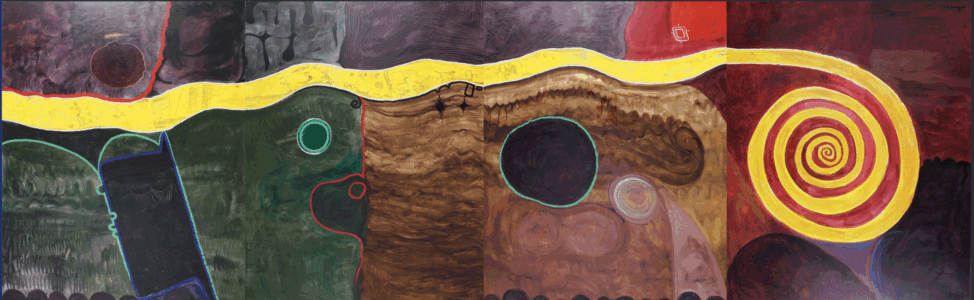
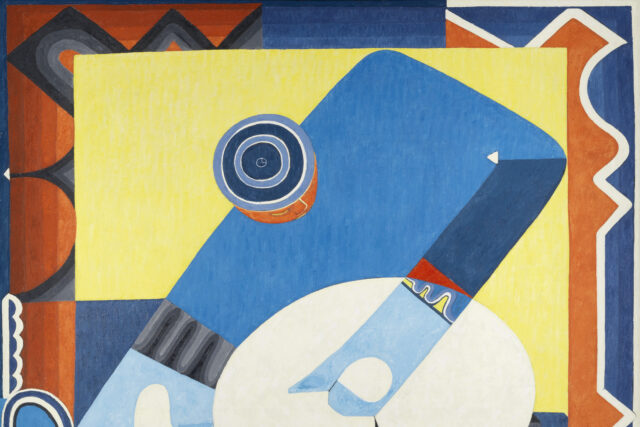
This autumn, Tate Modern is staging its first UK exhibition to trace the development of contemporary art in Nigeria. Spanning a period from indirect colonial rule to national independence and beyond, Nigerian Modernism celebrates both an international network of artists who combined African and European traditions and a vibrant artistic legacy. The exhibition presents the work of over 50 artists across 50 years, from legends such as Ben Enwonwu to contemporary giants such as El Anatsui. The exhibition charts the contemporary artistic dawn of Nigeria.
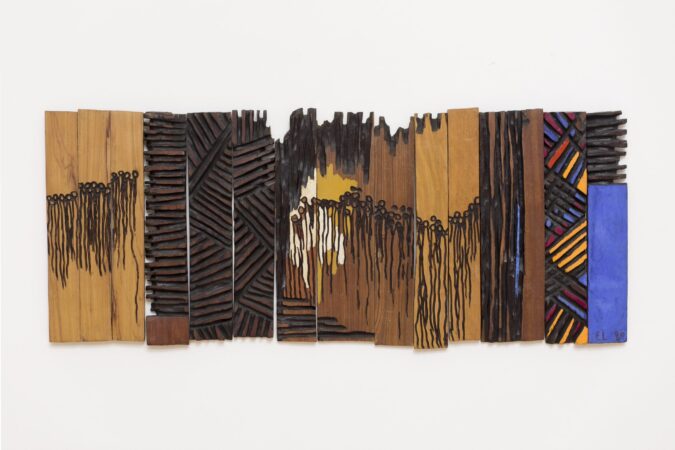
Nigerian Modernism follows Nigeria’s evolving political and social landscape during this turbulent period, challenging assumptions and presenting possible new futures for the country, while reclaiming West African traditions and reimagining them from a contemporary African perspective. Seeing this exhibition, it becomes easy to understand the roots of Cubism—legend has it that it was inspired by traditional West African art. But what is less well known is that those very African artists were also looking at and studying European art. The influence flowed both ways. These artists often returned from periods of study abroad bringing back new ideas, which they then fused with indigenous work to create something startlingly original.
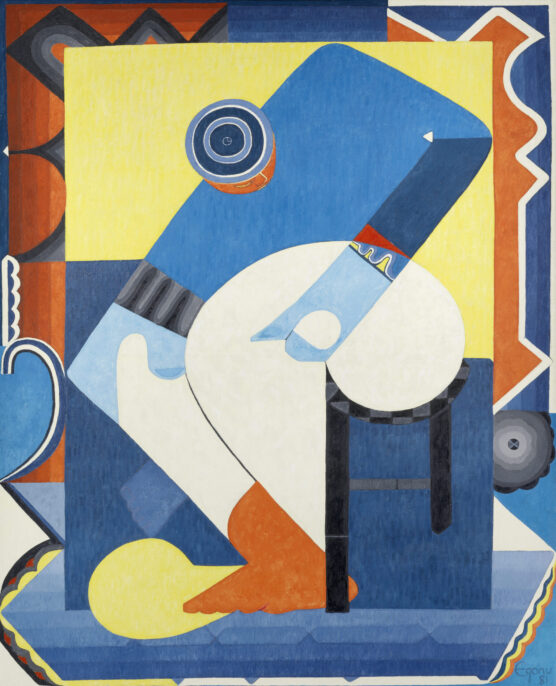
The exhibition includes more than 250 works—paintings, sculptures, textiles, ceramics, and works on paper—from institutions and private collections across Africa, Europe, and the US. It offers a rare opportunity to encounter the creative forces who revolutionised modern art in Nigeria. The exhibition also includes film footage taken during the period. One clip, in particular, offers a stark contrast to Western depictions of Nigeria at the time, which often showed people “madly dancing in the bush in grass skirts!” Here, in a video of a royal pageant, dancers are dressed in beautiful designer outfits, wearing jewellery containing precious stones, performing an elegant, contained ritual dance—quite the opposite of how this period is often portrayed.
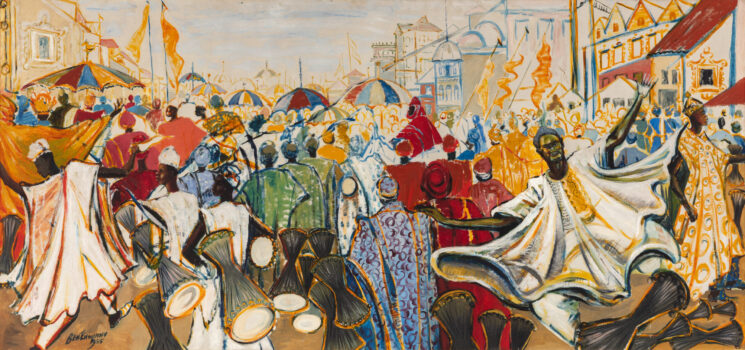
The art on display is dazzling and eye-opening, beginning in the 1940s amid calls for decolonisation across Africa and its diaspora. With the Nigerian education system under British governance, many artists trained in Britain—some exploring figurative painting for the first time while witnessing the West’s fixation on abstract African art. These artists sought to balance indigenous traditions with the changing colonial landscape and the growing calls for independence. Some of the globally celebrated artists of the period include Ben Enwonwu and Ladi Kwali. Enwonwu, in particular, adapted his Slade School training to celebrate African beauty and culture.
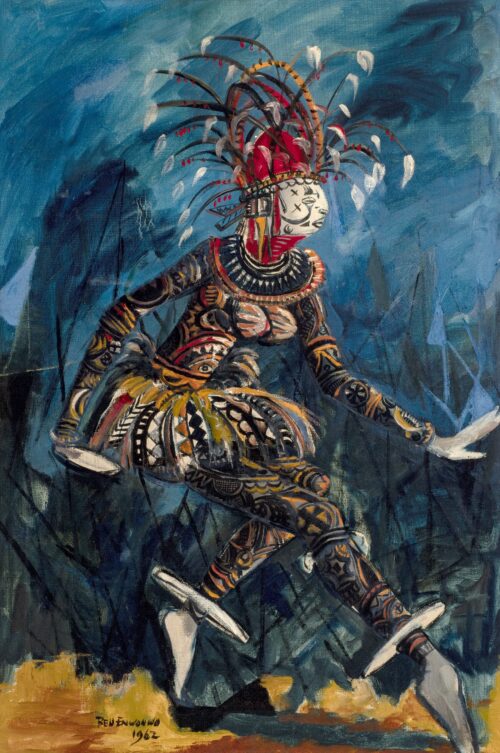
Independence on 1 October 1960 inspired a real sense of optimism throughout the country, with artistic groups creating work for a new union, a new nation. The exhibition highlights the legacy of the Zaria Arts Society, whose members included Uche Okeke, Demas Nwoko, Yusuf Grillo, Bruce Onobrakpeya and Jimo Akolo. Encouraged by teachers like the trailblazing Clara Etso Ugbodaga-Ngu, they developed independent creative styles centred around the concept of “Natural Synthesis,” merging Indigenous forms with modern expression.
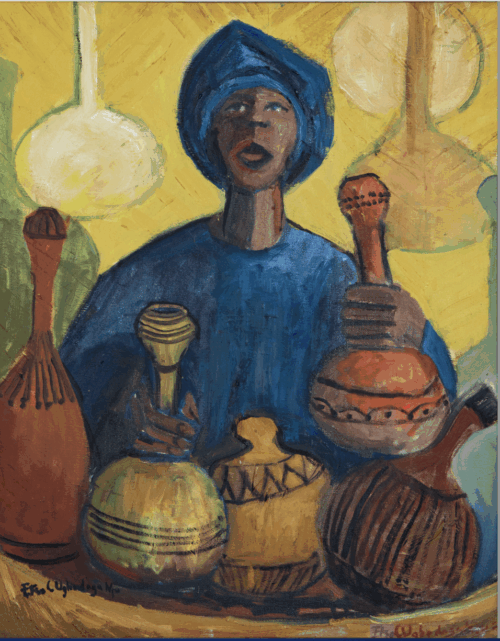
In the 1960s, amid an economic boom, Lagos became a dynamic cultural hub—tropical modernist architecture, public art commissions, and nightclubs filled with Highlife music. Meanwhile, in Ibadan, the Mbari Artists’ and Writers’ Club, founded by German publisher Ulli Beier, offered a discursive space run by an international group of artists, writers and dramatists including Chinua Achebe, Wole Soyinka and Malangatana Ngwenya. The Mbari Club was closely associated with the influential Pan-African modernist journal Black Orpheus, which will also be on display at Tate Modern.
In their wake, figures like El Anatsui would emerge. Sadly, the devastation of the Biafra War put an end to the collective search for a national artistic identity, and artists today tend to reflect their own regions rather than aiming to speak for the nation as a whole. But this stunning exhibition captures a period in which Nigerian artists were at the centre of shaping the cultural identity of a newly independent country.
Across town, 1:54—the Contemporary African Art Fair—returned for its 13th consecutive year with a beautiful overview of the work of artists from across the continent, featuring fifty exhibitors from eighteen countries. A significant number of these exhibitors are based on the African continent, and fourteen galleries are making their debut at the fair. With a strong presence from Nigeria, it is a joy to admire the sheer beauty of the work on show. Viewing it all reminds me of a comment a 13th-century traveller once made: wherever you look, there is always something new happening on the continent.