By Beverly Andrews
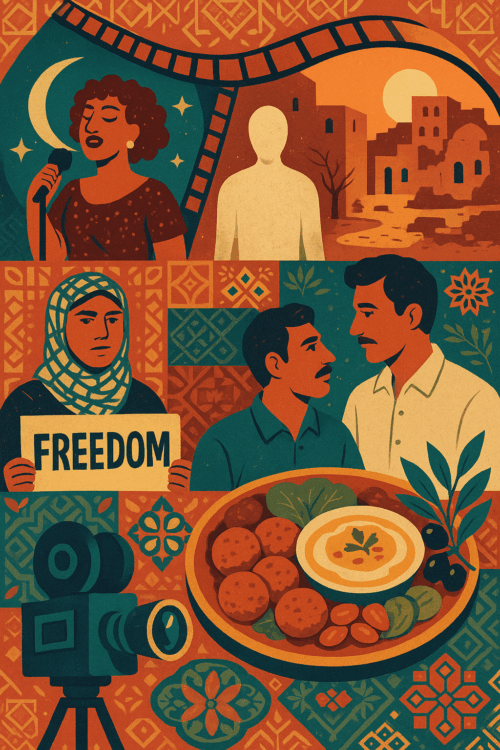
The Safar Film Festival remains one of London’s most important platforms for showcasing the work of filmmakers from across the Middle East. What began as a biennial event has since grown into the largest Arab film festival in the UK. This year marked the festival’s tenth edition—and, for the first time, its online screenings (offered in partnership with Aflamuna) were made available to viewers worldwide.
With an eclectic programme spanning countries, cultures, and genres, the 2025 edition felt especially significant amid current global tensions. Below are some of my personal highlights from this year’s selection.
This powerful documentary follows the lives of four young Sudanese political activists—Shajane, Maha, Muzmil, and Khattab—as they fight for freedom of expression. Covering the turbulent period between 2019 and 2023, the film captures the early hopes of a democratic Sudan and the devastation brought by civil war. It’s a moving portrait of a generation’s unfulfilled dream, told with urgency and clarity.
A strange, surreal feature in which several people in a Tunisian town disappear only to reappear several years later. Are they truly alive, dead or occupying some middle ground? Meanwhile the environment seems to be in the grip of some kind of deadly malaise. With fish dying, crops decimated by birds and the town’s residents struggling to reconcile with the spectral figures of their past, the atmosphere becomes increasingly fraught with tension and uncertainty. Throughout the viewer tries to work out the cause for the town’s decline. With two lead characters a local inspector Fathi (Neji Kanaweti) and his friend Amine (Bilel Slatnia), a doctor, who try to understand the cause behind these disturbing events. Visually stunning if thematically challenging.
A timely and important documentary, Jenin, Jenin documents the devastation of the one of the largest Palestinian refugee camps in the region, razing much of it to the ground with many of its inhabitants either displaced or dead. The filmmaker (who attended the festival) Mohammed Bakri visits the demolished camp and interviews some of its survivors.
Often dismissed as an Arabic version of The Rocky Horror Picture Show, Fangs(1981) is much more than a cult curiosity. Directed by Mohammad Shabl, the film uses vampirism as a metaphor to critique Egypt’s capitalist system—suggesting that the state’s economic policies drain the life from its people. Beneath its campy veneer lies a clever, biting satire that still resonates today.
My personal favourite was Layla, the debut feature by Amrou Al-Kadhi. This charming and deeply moving comedy-drama explores the relationship between a Palestinian-British drag queen and his white, straight-laced lover, Max—a man who is both drawn to Layla’s world but is equally repelled by it.
The film is a poignant reminder that the LGBTQ community is not monolithic but richly diverse. Layla offers a nuanced exploration of identity, intimacy, and the courage it takes to truly see—and accept—oneself and others.
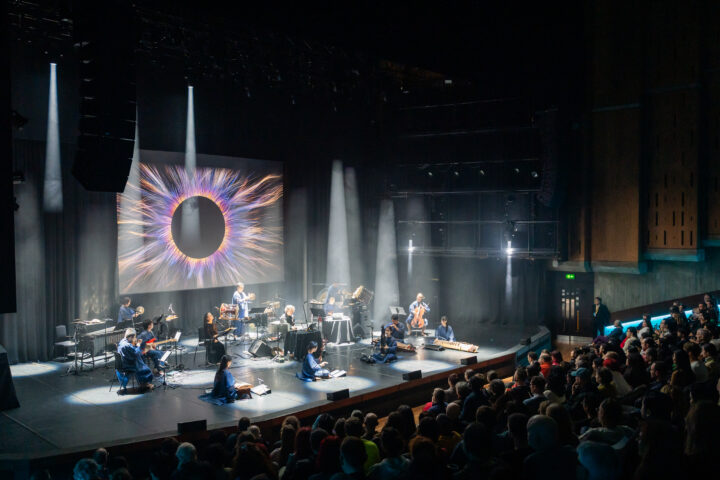
Running alongside Safar was the equally significant Shubbak Festival, a celebration of theatre, music, and visual arts from the Arab world. This year’s edition brought many of the region’s leading artists to London, but my favourite event was one of its smallest: the Shubbak Corner. In this creative pop-up, a local corner shop was transformed into Edgware Road’s own living room—a space offering food, art, and conversation.
Visitors were encouraged to share recipes and stories that connected them to home. In doing so, cultural differences gently dissolved. Strangers became friends, united by memory, flavour, and laughter. It was a gentle, beautiful reminder of the power of both food and storytelling to build community.
Both the Safar film festival and the Shubbak festival were welcome reminders about the power of art to build bridges and open the way to cultural understanding.