By Beverly Andrews

What causes a film or television show to rise above the noise and become a phenomenon? It’s a question production studios and networks constantly ask themselves. Too often, the answer is to repeat a formula that has worked before while overlooking anything new or daring that might actually capture the cultural moment. This mindset may partly explain the steep decline in cinema attendance, as well as the marked drop in television viewership.
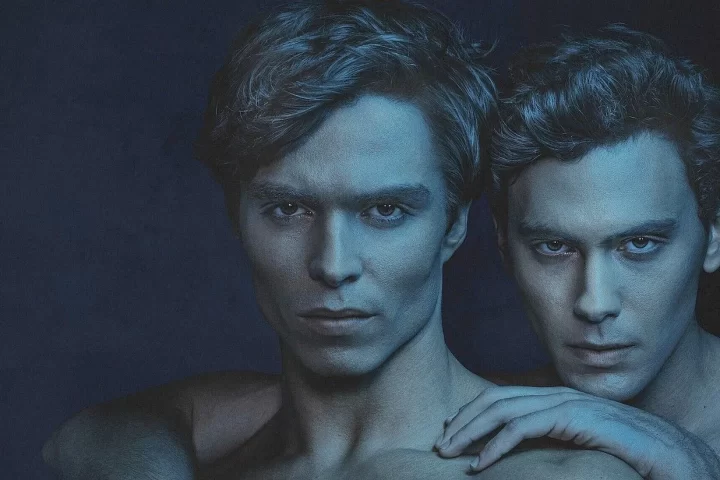
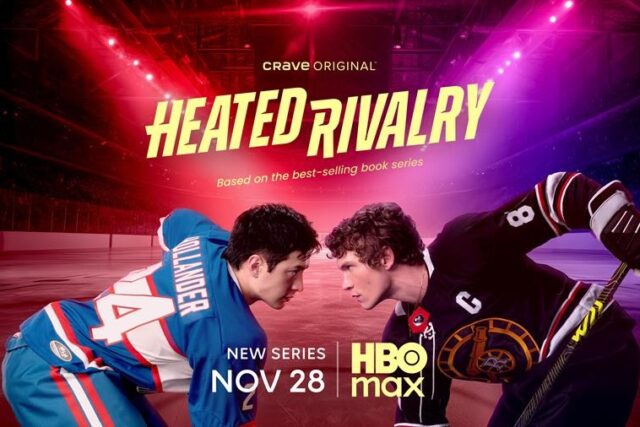
Presenting something genuinely new and fresh is exactly what Heated Rivalry manages to do. This gay hockey drama series charts the love affair between Russian star Ilya Ronazov—played with astonishing depth by Connor Storrie, much of it in Russian—and Shane Hollander, his shy but equally talented hockey rival, portrayed soulfully by Canadian actor Hudson Williams.
To say the show has taken off would be an understatement. Months after its premiere, this once-tiny Canadian production is now being screened at massive viewing parties with thousands in attendance around the world. Whatever magic Heated Rivalry has captured is something television producers everywhere are trying to understand—but there’s no question it has propelled both the series and its stars onto the global stage.
Told over six one-hour episodes, Heated Rivalry charts a relationship that begins with teenage rookies who, out of mutual curiosity, embark on an intense sexual relationship. Over the years, this bond grows into something neither man ever expected.
As time unfolds, the series reveals not only who Ilya and Shane are, but also the environments that shaped them and the families they come from. In Ilya’s case, his dysfunctional Russian family consists of a demanding father and an embittered brother—both police officers—and the lingering absence of a mother who died long ago. Raised under strict discipline, Ilya is burdened with his father’s expectations, constantly reminded that failure on the ice means failure for Russia itself, while also being expected to financially support his entire family.

Shane faces surprisingly similar pressure, though in a different form. As a potential Asian-Canadian hockey star, he is expected to represent his community. His mother—who also acts as his manager—has shades of a “tiger mom,” continually reminding him that children will be looking up to him.
The show subtly alludes to Shane’s neurodivergence, a point Rachel Reid, the author of the novel series on which the show is based, has referenced in interviews. Clues suggesting autism are scattered throughout but never overstated: his need to carefully fold his clothes before intimacy, his social discomfort in public settings, and moments of sensory overload during high-stimulation events, such as his team winning the league championship. Importantly, this is something Ilya seems to intuitively understand and accept without judgment.

The series also features graphic sex scenes between the couple—an unprecedented step in its depiction of queer lovemaking on television. Surprisingly, these moments never feel gratuitous. Instead, they deepen the audience’s understanding of how and why these two fierce rivals fall deeply in love, a point frequently highlighted by the show’s largely female fan base.
These scenes emphasize consent throughout, most notably in a beautifully shot first encounter in which Shane experiences penetrative sex for the first time. Ilya consistently checks in with him, ensuring his comfort at every step. In many ways, the series offers a textbook example of what enthusiastic, ongoing consent should look like.

Perhaps this is the core of Heated Rivalry’s success: it serves as a powerful antidote to the world’s current obsession with toxic masculinity. Within one of the most physically punishing team sports imaginable, the show presents two men who may struggle with their sexual identities but remain tender, respectful, and emotionally open with one another.
At a time when global conflicts seem increasingly fueled by rigid and destructive ideas of masculinity, Heated Rivalryoffers a welcome alternative. It reminds us that men can be kind and gentle while still being fully, unapologetically masculine.
Both Storrie and Williams embrace this vision beautifully in their performances. As they are now being mobbed by fans worldwide, it’s clear the message is resonating. With echoes of Timothée Chalamet’s breakout role in Call Me by Your Name, Connor Storrie and Hudson Williams deliver performances so brave and authentic that they seem poised to follow in his footsteps and become global names.