By Claudio Sales Palmero
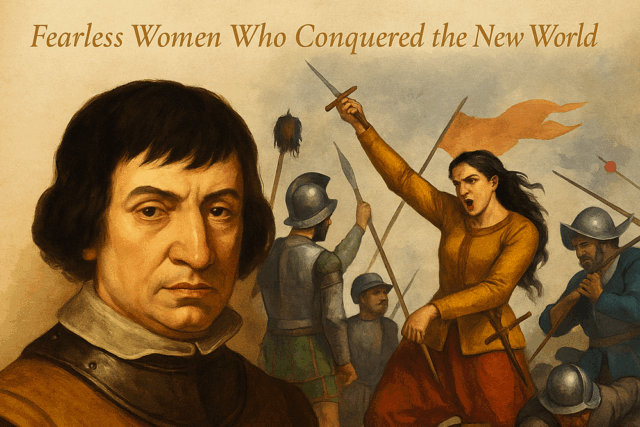
Throughout history, few women have defied the constraints of their time with such audacity, resourcefulness, and determination as Catalina de Erauso, known as La Monja Alférez (The Nun Lieutenant), and Inés de Suárez. Born into vastly different social circumstances, their lives might easily have dissolved into obscurity. Yet, driven by a spirit of adventure and armed with unwavering courage, they carved their names into the annals of history, captivating imaginations for centuries.
(San Sebastián, 1585 – Cotaxtla, New Spain, 1650?)
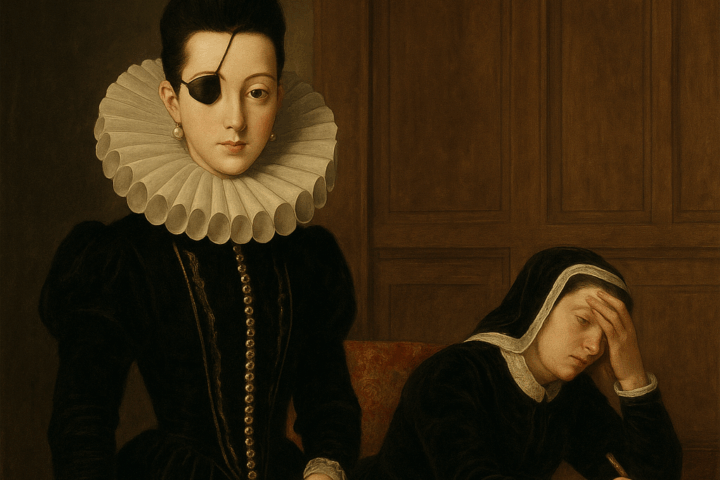
Catalina de Erauso was born into a prosperous family in the Basque city of San Sebastián. Her father held a significant military post under King Philip III, and it was expected that Catalina’s life would follow the quiet, obedient path laid out for women of her status. Instead, her indomitable character led to a remarkable—and at times infamous—life of adventure. As a child, she was placed in a convent where her aunt served as prioress, intended to receive an education and moral upbringing. However, her rebellious nature soon became evident. Transferred to a stricter convent at the age of fifteen, she fashioned men’s clothing for herself, stole the keys, and fled—thus beginning one of the most extraordinary odysseys of the Spanish colonial era. Wandering through the countryside, surviving on what she could scavenge, Catalina eventually sought refuge with a scholarly relative in Vitoria, who failed to recognize her. During her brief stay, she learned some Latin but was forced to flee again following a sexual assault.
In Valladolid, she disguised herself as a man and secured employment as a court page. But upon hearing of her father’s arrival at court, she departed for Bilbao. There, fate was no kinder—she became entangled in a street brawl and, after striking a young man with a stone, was imprisoned until his recovery. Undeterred, Catalina travelled to Estella, where she served a nobleman who provided her with fine clothing and comfortable living. But as she later wrote, she abandoned this security simply for the thrill of adventure.
She soon met a sea captain who took her to Seville, and from there to Sanlúcar de Barrameda, where she enlisted as a cabin boy bound for the Americas, still concealing her true identity. In the New World, Catalina faced Dutch pirates off the Venezuelan coast and survived the encounter. In Cartagena de Indias, after shooting a crew member during a dispute, she fled inland. Her travels took her to Panama, where merchant Juan de Urquiza offered her protection and employment. Yet once again, violence followed—after injuring a young man in a fight, her protector proposed marriage to save her from prison. Catalina refused, unwilling to reveal her secret. Eventually, she found herself in Trujillo, managing a shop, only to kill a challenger in yet another duel. She fled to Lima, was dismissed from employment for seducing a shopkeeper’s relative, and in 1619 enlisted in a military campaign bound for Chile.
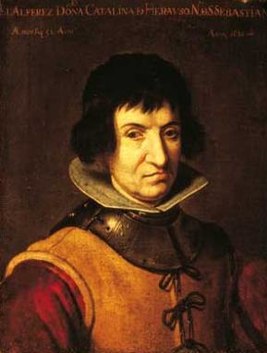
There, Catalina distinguished herself in the brutal wars against the Mapuche people, gaining notoriety for her ferocity in battle. Rising to the rank of lieutenant, she even commanded troops after her superior fell wounded. However, her ruthless conduct—particularly towards indigenous populations—hindered her advancement. In a tragic turn, she even killed her own brother during the conflict, neither of them recognizing the other.
Her reputation as both soldier and fugitive followed her across the Andes to Argentina, where she deceived two young women with promises of marriage, keeping their dowries before vanishing. Despite facing crimes punishable by death, Catalina always managed to elude the consequences.
In 1623, her luck faltered. Arrested in Huamanga, Peru, and seeing no alternative, she confessed her true identity to the local bishop—revealing that she was not only a woman, but a runaway nun. The bishop intervened, sending her back to Spain.
There, Catalina’s astonishing story captivated the court. She was granted an audience with King Philip IV, who ratified her military rank and famously dubbed her La Monja Alférez—The Nun Lieutenant. Her legend spread across Europe, even earning her an audience with Pope Urban VIII, who granted her permission to continue dressing as a man.
Catalina eventually returned to the Americas in 1630, settling in New Spain (modern-day Mexico), where she established a transport business between Mexico City and Veracruz. She died sometime around 1650, her life shrouded in legend and controversy.
(Plasencia, Spain, 1507 – Santiago, Chile, 1580)
Inés de Suárez was born into humble circumstances in the Spanish town of Plasencia. Her mother taught her the craft of sewing—a skill that might have condemned her to an ordinary, forgotten life, had it not been for her bold spirit and taste for adventure.
At nineteen, Inés married Juan de Málaga. In 1528, her husband departed for the Americas in search of fortune, leaving Inés behind, awaiting news that never came. At the time, women were forbidden from travelling to the Indies unaccompanied, unless explicitly summoned by their husbands. But Inés, defying convention, secured a royal permit and set sail to find him.
Upon arriving in the New World, she discovered her husband had perished at the Battle of Las Salinas. As a soldier’s widow, she was granted a modest encomienda in Cuzco, where she met Pedro de Valdivia—future conquistador of Chile and then maestre de campo to Francisco Pizarro.
What began as friendship with Valdivia blossomed into a relationship, though unofficial, as Valdivia had a wife in Spain. Determined to carve his own path, Valdivia launched an expedition to Chile in 1540. With eleven Spaniards and a thousand indigenous allies, they braved an eleven-month journey through the harsh Atacama Desert.
Inés, posing as a servant to evade the scrutiny of the Church, proved indispensable. She nursed the wounded, foiled a mutiny against Valdivia, and, reputedly blessed with an uncanny ability to locate underground water, was vital to the expedition’s survival.
Upon reaching the fertile Mapocho River valley, they established Santiago—the future capital of Chile. But their presence soon provoked fierce resistance from the Mapuche people, who besieged the settlers behind the settlement’s palisades.
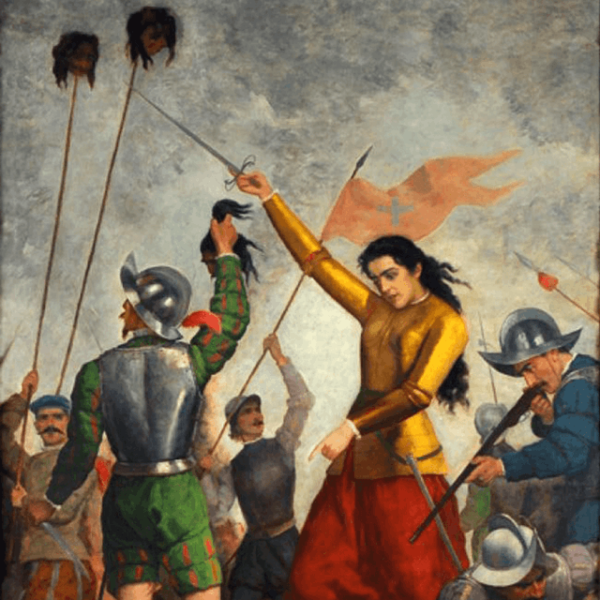
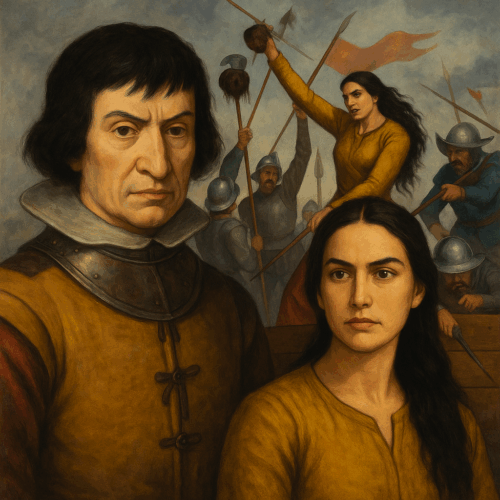
The Spanish held seven Mapuche chiefs hostage, debating whether to release them or keep them as leverage. Inés proposed a third, brutal option: execution, to instill terror among the besiegers. When the men hesitated, Inés took a sword, slew the captives herself, and had their heads hurled over the palisade. The psychological blow shattered the enemy’s resolve, allowing the Spanish to launch a decisive counterattack that saved the colony.
For ten years, Inés remained Valdivia’s companion. But success bred jealousy, and Valdivia’s enemies denounced him for his relationship with her. Though acquitted, the price was high—he was ordered to part from Inés and summon his wife from Spain.
Inés was married off to Rodrigo de Quiroga, who would later become governor of Chile. In the following years, she lived a quieter life, overseeing the construction of public buildings and securing Santiago’s position as the colonial capital. Her influence was pivotal in shaping the first forty years of Chilean colonial history.
Catalina de Erauso and Inés de Suárez, though vastly different in temperament and background, shared an unrelenting defiance of the limits imposed upon them as women in a patriarchal, colonial world. Through courage, cunning, and at times cruelty, they reshaped their destinies, leaving behind legacies both controversial and extraordinary—testaments to the boundless complexities of human ambition and survival.