By Beverly Andrews
While there are numerous prestigious film festivals around the world—Cannes, Venice, and Sundance among them—none holds greater sway over a film’s commercial prospects than the Toronto International Film Festival. Founded in 1976, TIFF, as it’s affectionately known, has steadily risen in prominence to become the most influential festival when it comes to shaping a film’s financial future. A strong reception in Toronto can all but guarantee box office success.
Like many festivals, TIFF shifted to an online format during the pandemic. But in contrast to others, it has now made a full return to in-person screenings for its 2022 edition.
Below is a list of some of my personal favourites:
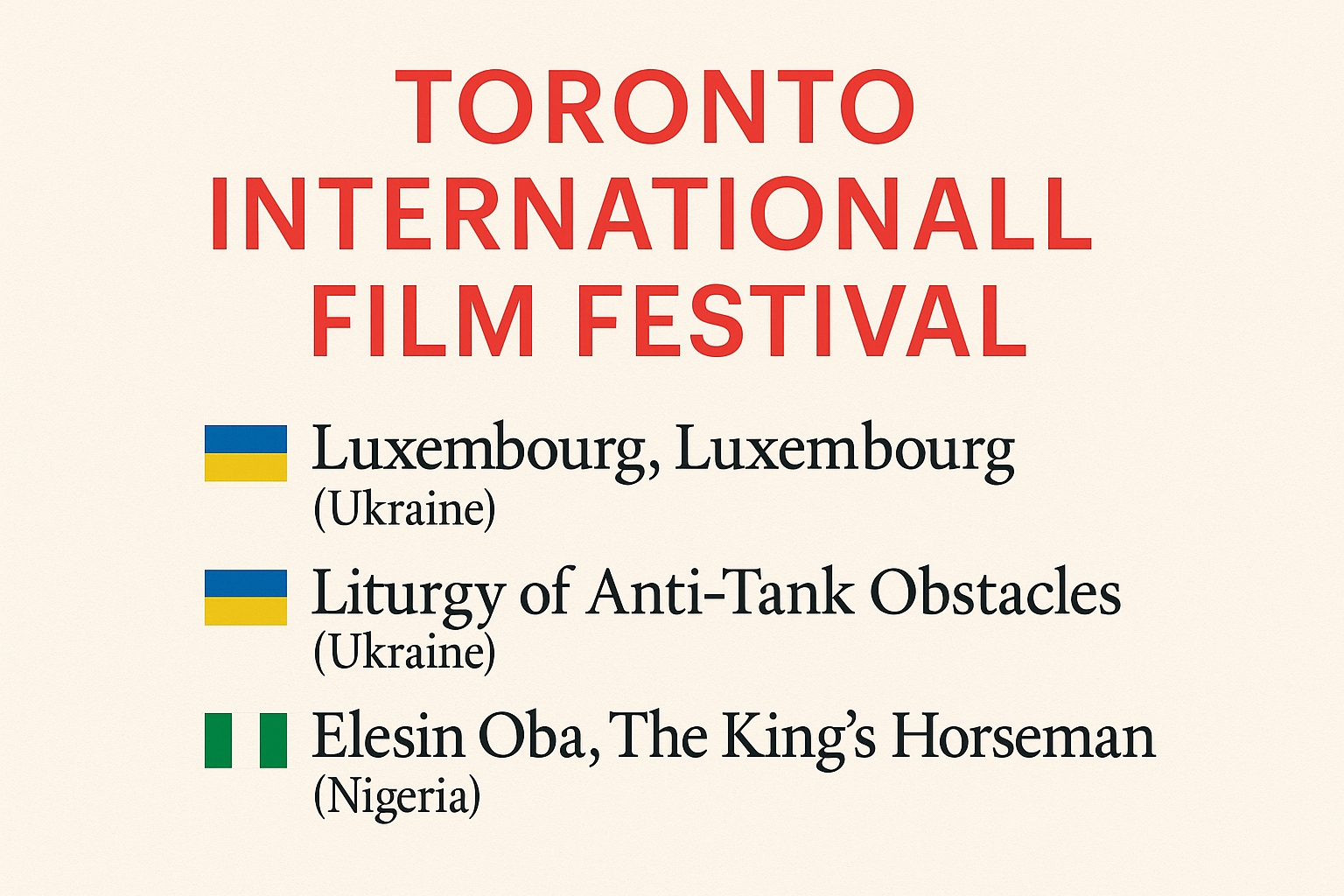
The Ukrainian feature Luxembourg, Luxembourg, directed by Antonio Lukich, follows the story of twin brothers Kolya and Vasya—sons of a Ukrainian mother and a Serbian father. At the start of the film, their father is portrayed as a powerful local gangster, a larger-than-life figure capable of making the impossible happen—at least in his sons’ eyes. Then, during their childhood, he vanishes without explanation.
Now adults, Kolya and Vasya wrestle with unresolved feelings of loss and a deep need to uncover the truth about their father’s disappearance. The two have taken divergent paths in life: Vasya works as a police officer, while Kolya drives a bus and supplements his income by secretly dealing marijuana—more in line with their father’s shadowy legacy.
Their lives are upended by a phone call from Luxembourg informing them that their long-lost father is gravely ill and wants to see them one last time. This sparks a frantic journey to reach him before it’s too late.
Though the premise may sound melodramatic, the film unfolds as a darkly comic and unexpectedly poignant road trip. Along the way, the brothers confront the emotional weight of their past and the illusions they’ve carried for years. Set against the backdrop of Ukraine, the film gains additional emotional resonance, particularly when viewers recognize that many of its filmed locations have since been destroyed or altered by war.
During their journey, the brothers are struck by the luxuries they observe in the West—luxuries far removed from their own lived experience. This observation underscores the stark economic disparity between Ukrainians and their Western counterparts—a disparity that existed even before the war. Ironically, this same material gap has fueled resentment and widespread looting among some Russian soldiers, who now see in Ukraine a standard of living that feels unattainable back home.
The film ultimately delivers an unexpected ending, subtly suggesting that our perceptions of people—especially those closest to us—can often be deeply flawed.
Liturgy of Anti-Tank Obstacles is a quietly powerful Ukrainian short film that offers a poignant glimpse into how radically everyday life has changed since the Russian invasion. In the face of devastation, people find creative and meaningful ways to contribute to the war effort.
Directed by Dmytro Sukholytkyy-Sobchuk, the nearly wordless documentary follows four sculptors who dedicate themselves to producing both anti-tank obstacles and religious artifacts. These contrasting creations—tools of resistance and symbols of faith—highlight the dual struggle for survival and spiritual endurance in a time of immense darkness. The film shows not only the obstacles themselves but also the wreckage of Russian tanks they’ve helped to disable, offering a quiet testament to their effectiveness.
Through its sparse but evocative visuals, Liturgy of Anti-Tank Obstaclescaptures the resilience of a nation whose physical infrastructure may be shattered, but whose spirit remains defiantly unbroken.
Elesin Oba, The King’s Horseman marks the final feature directed by the late Biyi Bandele—an extraordinary filmmaker, acclaimed novelist, and a personal friend. In this poignant farewell, Bandele delivers a masterful screen adaptation of Wole Soyinka’s seminal play, a cornerstone of African literature that explores the devastating consequences of colonial interference in indigenous traditions.
The story centers on a deeply rooted Yoruba custom: upon the death of a king, his horseman must follow him into the afterlife by taking his own life, ensuring the king’s spirit is not left to wander alone. However, Elesin, the horseman, is a man who has long indulged in the pleasures and privileges of his role without fully embracing its sacred responsibilities. When the time comes to fulfill his duty, he hesitates.
Complicating matters further is the intervention of a British colonial officer, who—despite displaying little regard for the people under his rule—refuses to allow the ritual to proceed. His ignorance and arrogance lead to Elesin’s imprisonment, triggering a tragic sequence of events that reflect the broader cultural and spiritual disintegration wrought by colonialism.
Soyinka, who was awarded the Nobel Prize in Literature in part because of this work, offers a fierce critique of those who judge or suppress cultures they scarcely understand. Through Bandele’s cinematic lens, the play’s rich language and complex moral landscape are brought to life with elegance and intensity.
The 2022 Toronto International Film Festival reaffirmed its position not just as a launchpad for award-season hopefuls, but as a global stage for bold, emotionally resonant storytelling. From the darkly comic odyssey of Luxembourg, Luxembourg to the meditative resilience captured in Liturgy of Anti-Tank Obstacles, and the powerful cultural reckoning of Elesin Oba, The King’s Horseman, this year’s selection underscored the festival’s commitment to amplifying diverse voices and urgent narratives. TIFF remains a place where art and politics intersect, where laughter coexists with loss, and where cinema continues to reflect—and challenge—the world we live in.