CHRONICLE OF A REVOLUTION: UKRAINE 2013-2017
Author: Pierre Scordia
8. Parliament elections & the power of Western regions
9. War in Donbas | Welcome to Absurdland!
Media Coverage in Britain and France
THE ECONOMIST’S VIEW
8. Parliamentary elections & the power of Western regions
For The Economist, the new majority in parliament reflects the power of the Ukrainian western regions. Moreover, the turnout in the west is higher than in the south or east (70% in Lviv versus 40% in Odessa). It is noted that the moribund Party of Regions, renamed “Opposition Bloc”, has obtained 9% thanks to the eastern regions, which will allow the Rada to once again welcome 60 to 70 deputies of the former system. They will be faced with incoming deputies from the Maidan movement together with commanders of anti-rebel battalions. The Economist warns against cutting off opposition MPs as this would lead to isolation of Russian-speaking areas where Russian agents are still active (Kharkiv, Odessa, Zaporizha, Mariupol and Kiev).
Certainly, the new coalition is pro-European, but the ruling parties could split because of different interests or personal ambitions, as occurred after the Orange Revolution. The Economist recalls that the issue here is the survival of Ukraine, a country on the brink of bankruptcy. In order to obtain Western loans, it will be necessary to reform the country in depth but any economic reforms will bring with them more misery in a country already ravaged by war. On top of this, Ukrainians will have to deal with gas cuts.
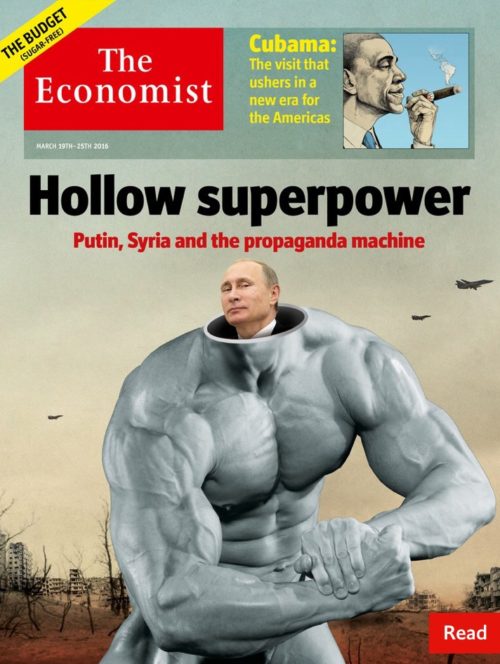
In its article of 1st November 2014, the magazine warns that if Ukraine does not reform, then either it will implode or Putin will own it.
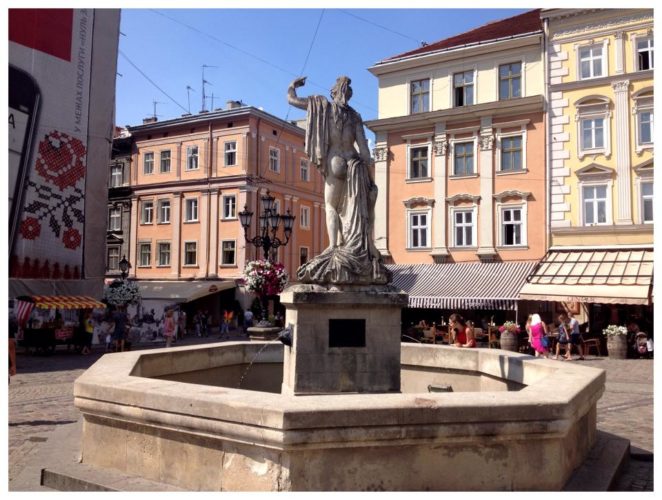 The beautiful city of Lviv | ©Pierre Scordia
9. War in Donbas | Welcome to Absurbland!
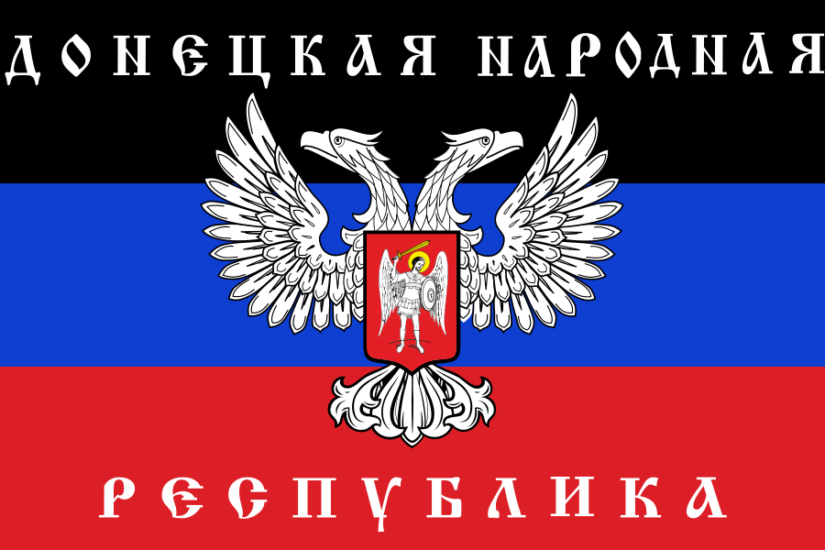
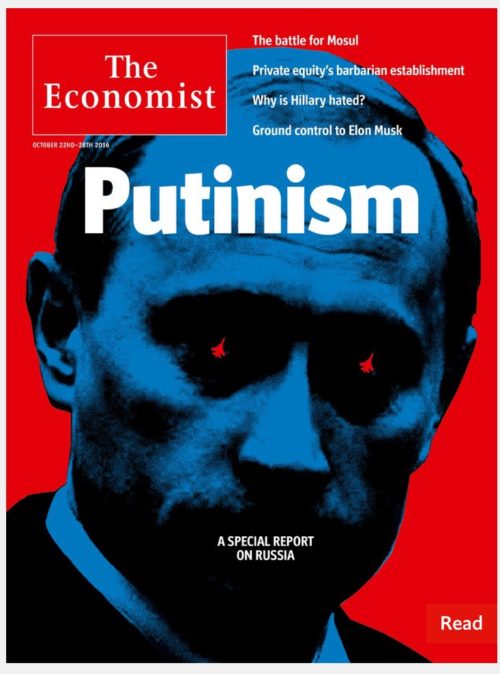
The media talks a little about elections in the Donbas which is occupied by pro-Russian forces. These are not recognized by the international community, with the notable exception of Russia. There are no international observers. Only a few representatives from the European far-right made the trip (the National Front, Forza, the Hungarian Jobbik). The Economist stresses the link between Putin and far-right or Eurosceptic parties and asserts that Putin’s objective is to undermine the European project. The British magazine also mentions the ambiguous political game of the anti-liberal Hungarian leader, Viktor Orban who would like to see the small Transcarpathia region with its 200,000 Hungarian inhabitants become autonomous.
On 11th February 2015, in an article entitled “What Russia is up to in Ukraine”, the British magazine takes a very critical stance towards Russia. According to The Economist, Ukraine is losing the war while the West, very hesitant, is trying to obtain a peace agreement. This is an unfair war because Ukraine has never threatened its Russian population, has never been controlled or led by fascists and, moreover, it has a much less popular far-right than Western Europe. Besides, NATO has never threatened Russia. Quite the contrary, the members of this organization have cut down on their military spending[2]. The Guardian and The Spectator report along the same lines, The Guardian quoting Gorbachev as saying that there has never been any discussion or agreement with Moscow on the expansion of NATO.
On 10th August 2015, the newspaper Libération, in an article entitled “Ukraine, a country sold off on the diplomatic market?” is concerned about American interference in the country’s political process. By forcing Kiev to accept the autonomy of the new Donbas entities, a perversion of the old system, American diplomats have betrayed the Maidan Square Revolutionaries who would see the end of their dream for a society free from corruption and Russian interference. Westerners have realized that a solution for Syria cannot be reached without Russia, and to this end, a compromise must be reached on Ukraine[2].
On 25th May 2017, The Economist judges the Minsk II agreement dead in the water. No one believes in it, even if everyone officially backs it. In addition, President Poroshenko, who is unpopular in the east of the country with those on all sides, does not want the people of Donbas to vote in the next Presidential elections. Poroshenko built his image through the struggle against Russia, implying that peace in the Donbas would not interest him. As for Moscow, they wish to neither finance the reconstruction of the Donbas nor reach an agreement that would prevent them from meddling in Ukrainian affairs.
Moreover, the magazine points out that all sides benefit from the traffic on the frontline whether it be Ukrainian customs officers or paramilitaries in the Donbas. The blockade imposed by Ukrainian militants does not help matters in Kiev nor in Donetsk.
On 18th December 2015 Le Figaro publishes a sarcastic article on the self-proclaimed republics with a title that speaks volumes: “Ukraine, travel to Absurdland”(Voyage en Absurdie). Donetsk is depicted as a ghost town that survives in isolation, its suburbs destroyed and its landscapes surrealist. Propaganda is gaining momentum there, associating the Ukrainian nationalists with Nazis whilst making constant references to the events of the Second World War and recalling the anti-Semitic role of Stephan Bandera (the Ukrainian national hero). From now on it will be Moscow that finances this region and besides, the ruble has become the currency. Moscow will have to pay for the reconstruction of Donetsk and Luhansk because it seems that a reconciliation between Kiev and the Russian-speaking population in Donbas is inconceivable.
For The Times newspaper, the war in Donbas may be used by Russia to try out new warfare methods against the West. Their source comes from the British army.
FORM-Idea.com London, 23rd January 2020 | Read this article in French
Chronicle of a Revolution | Main Events 2013-2017
2. The beginning of the political crisis
3. The February Revolution of 2014
4. The annexation of Crimea
5. Odessa, the Pearl of the Black Sea at stake
6. Petro Poroshenko: the Providential man?
7. Russian roulette in Ukrainian sky | Flight MH17
8. Parliament elections & the power of Western regions
9. War in Donbas | Welcome to Absurdland!
10. The Eurovision: a diplomatic row
11. Failures and Successes of the Ukrainian Revolution
12. Russian propaganda
Next chapter