Media Coverage of the Ukrainian ‘crisis’ in Britain and France
Published in July 2017. For sources, please check heraldis.onu.edu.ua
Author: Pierre Scordia
The Ukrainian Revolution followed by Russian aggression was in part analyzed in the French and British press with some scepticism, although the great majority of newspapers and the governments of these two countries firmly condemned the annexation of Crimea by Russia as well as Russian military support for the Donbas rebels. However, some of the French and British media were swayed by rumours spread by Russian propaganda. Many journalists have misled the public in their oversimplification of the conflict by implying a false political division between Ukrainians and the Russophone population, deplorably confusing the Russian-speaking Ukrainian populace with Ukrainians of Russian origin.
The Western media’s view on the Ukrainian Crisis has already been studied. So in order to bring something new, we decided to use as a central theme the vision of the prestigious British magazine, The Economist, which summarizes quite accurately the western, liberal view on the Ukrainian conflict. We also looked at different British and French newspapers and online media from 2013 to 2017. We have divided this research into eleven events, starting from the Trade War in 2013, The February Revolution, Crimea’s annexation, Odessa’s fire, Petro Poroshenko’s election, the destruction of the Malaysian airliner, the new Rada assembly, the self-proclaimed Republics in Donbas, the Eurovi- sion diplomatic crisis between Ukraine and Russia, the decommunisation laws and finally the ban on Russian social networks in Ukraine.
MEDIA COVERAGE OF THE UKRAINIAN CRISIS IN BRITAIN & FRANCE
The British media are particularly interested in Vladimir Putin’s strategy, his politics and propaganda machine. One could say that there is paradoxically both admiration and revulsion for the Russian president.
As far as Ukraine is concerned, there is a key misunderstanding of the country in that it is presented as split with the political boundary based on the linguistic boundary. Odessa, for example, is perceived as a deeply divided city, whereas the polls showed right from the beginning of the conflict that separatism attracted only a tiny fraction of the population. This mistake derives from the influence of Vladimir Putin’s point of view associating Russian-speakers with Russians. Many experts (Andriy Protnov, Laas Leivat, Peter Dickinson, Timothy Garton Ash, Howard Arnos) have noted that the European media, in particular in Germany, Britain and France, have applied terminology used by Kremlin propaganda. Thus we speak of “separatists” or “pro-Russian rebels” as if it were a civil war when in fact we are rather dealing with a conflict orchestrated by Russia. On the other hand, the Western media do not reiterate terms used by the Ukrainian government, for example “terrorists” or “anti-terrorist operations”.
British and French journalists adopt neutral expressions such as “Ukrainian crisis” when dealing with the armed conflict in the Donbass, since officially there is no war between Russia and Ukraine, whether you are in Kyiv or in Moscow. The Independent newspaper regrets that Western leaders refuse to speak of an “invasion”, preferring the words “aggression” or “incursion”.
To sum up the English and French journalistic interpretation, we will take as a central theme the vision of the prestigious British magazine, The Economist, which summarizes quite accurately the western, liberal view on the Ukrainian crisis while remaining solicitous to inform readers about different interpretations that may go against their view or values.
BEGINNING OF THE CRISIS
The magazine was interested early on in the trade war which threatened both countries because of the project of association between Ukraine and the European Union. It mentions the Russian pressure on Ukraine to renounce this agreement. Although Russia has the ability to exert pressure, The Economist notes that Moscow has already lost the media battle, which partly explains why the project of association remains very popular with the Ukrainian population (24/08/2013).
The Economist is fairly impartial from the start. In an article of 23th November 2013 entitled “Playing East against West”, it points out that Ukraine, a country that has not yet acquired the solid culture of a nation state, is caught in a vice between two blocs, the European Union and Russia, both of whom expect Kyiv to adhere to its alliance while renouncing the other. The Economist notes that without Ukraine, Russia would no longer be an empire and its borders would retreat to those of the seventeenth century. It is very likely that an association agreement between the EU and Ukraine would be the red line for the Kremlin.
The Economist points out that Poland and Sweden play their part in the diplomatic credibility of this association agreement. A partnership with Eastern Europe and the Caucasus without Ukraine would signal a failure for the European Union. However, the problem for the EU is that Ukraine’s values are so out of tune with those of Europe. For this British magazine, Ukraine remains a corrupt country dominated by a parasitic elite in which the President cares little for the national interest with his only concerns being holding onto power and the enrichment of his clan.
The Economist takes a harsh line with its conclusion: no matter who wins the game, any agreement would be difficult to implement.
Seven days later, The Economist writes that Ukrainian President Yanukovych made a serious strategic mistake in maintaining the status quo (in refusing to sign the association agreement), but by so doing, he did Europe a great favour, saving the EU from having to collaborate with a dubious regime. Moreover, an association would most likely have served to raise the President’s popularity and have him re-elected in 2015.
The magazine estimates that Yanukovych’s time in power is running out. It is unlikely that he will be democratically re-elected because of the anger he has just triggered with the middle classes and above all with the young. For many Ukrainian entrepreneurs, the association treaty with the EU would have offered the best possible protection from the tax racketeering of the Yanukovych clan.
THE FEBRUARY REVOLUTION OF 2014
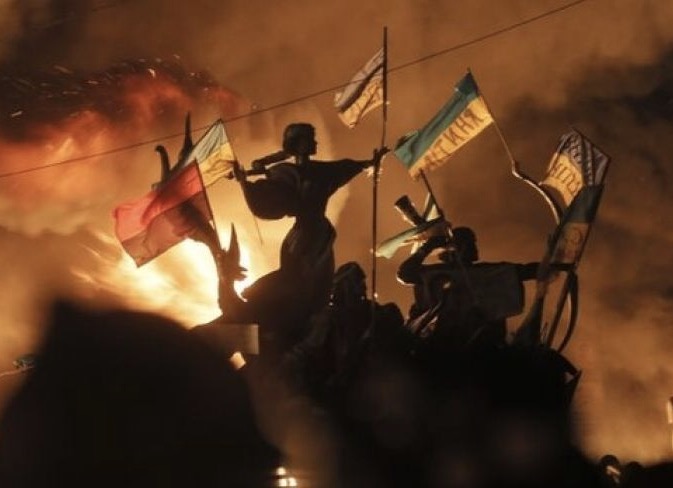
This revolution has no name because it is not yet over. The elite in place following the fall of the Yanukovych regime is hardly pleasing to the population. The cold reception reserved for opponent Yulia Tymochenko on Maidan Square reflects this feeling. The Maidan revolutionaries want an end to the oligarchic system that exploits the State rather than serving it. The protesters have no confidence in the Rada nor the leaders of the opposition. They want to make change happen. The Rada, for its part, makes the terrible mistake of removing the status of Russian as an official language (despite the Rada Parliament itself being dominated by the Party of Regions, a largely Russian-speaking party). This political gesture serves to fuel Putin’s propaganda and further contributes to the division of the country.
For The Economist, the only thing that unites the country is the recognition of Kyiv as the national capital. Kyiv is a national symbol with which both Ukrainian-speaking and Russian-speaking Ukrainians identify themselves. For the magazine, it is urgent that the new government in place builds bridges between the Russian-speaking regions of the East and South and the Western oblasts. The magazine reminds us that Western Ukraine experienced sovietisation as recently as 1939. It underlines the role of the mayor of Lviv, Andrey Sadovyi, who declared a “Russian Day” in the city where people are invited to express themselves only in the language of Pushkin.
The magazine concludes by predicting that the next challenge will come from Crimea because it is a safe bet that Putin, humiliated, will seek to destabilize Ukraine, as he has already done in Georgia with Abkhazia. It is possible that Putin is trying to annex the Crimean peninsula.
For the left-wing newspaper The Guardian, Westerners do not understand that President Yanukovych is no worse at corruption level than opposition leaders including the wealthy Yulia Tymoshenko. However, The Guardian, through the voice of Shaun Walker, is worried about Russian propaganda that associates the protesters with nefarious people in the pay of the West whose ultimate goal is to destabilize Russia. The contradiction is that the defenders of the Russian military bases in Crimea who denounce the fascists in Kyiv behave exactly like people of the far-right. As for The Financial Times, they regret that the Russian media do not report the true picture, for example omitting to mention how a large section of the Ukrainians enrolled in the Ukrainian army and in the National Guard are Russian speakers. The Financial Times deplores this confusion between Russians and Russian speakers, initiated by President Putin.
CRIMEA
Fears expressed by the British magazine The Economist regarding the fate of Crimea proved to be correct, and 15 days later they publish an acerbic article on Russia entitled “Asymmetric Wars” where the referendum in Crimea is described as a political farce. However, they go on to advise Ukraine to accept this annexation in practice though not in law. If Ukraine wants to become a western-style democracy, it must concentrate on reforms and not focus on nationalism or reunification with Crimea. As for the West, it must respond by organizing a Marshall Plan to help Ukraine to modernize. According to the magazine, the best way to regain possession of Crimea is to demonstrate to the Crimean people that Ukraine is becoming wealthier and prospering democratically. For the time being, Ukraine has a duty to protect the Crimean Tatars by facilitating their refuge on its territory.
For the strongly right-wing French online newspaper Causeur, borders are not inviolable since there has been a precedent with Kosovo. This argument was also taken up by François Fillon during his presidential campaign.
Fourteen months later, The Economist considers the annexation of the Crimean peninsula to be disastrous. Western sanctions and the Ukrainian blockade have hindered any development of the tourist industry, a vital sector for the Crimean economy. The absence of a platform for political and media expression for the Ukrainian and Tatar populations is noted along with repression of opposing voices. Although The Economist admits that the local population remains loyal to Russia, the review states that one-third of the population is made up of retirees, most of whom are nostalgic for the Soviet Union. Finally, 85% of the Crimean budget is financed by the Russian federal government.
The French newspaper Le Figaro, in an article of 23rd November 2015, talks about “pro-Russian authorities” in Crimea and not “Russian authorities”. This conservative paper mentions the attack on electric pylons, plunging the peninsula into blackout, since Crimea depends on Ukraine for 70% of its electricity supply. This sabotage would be the work of the far-right nationalist group Pravi Sektor and Tatar militants whose leader is calling for an investigation into kidnappings and murders taking place in Crimea.
ODESA
In the clashes in Odesa that killed more than 40 people (most of whom were burned alive – on 2nd May 2014), pro-Russian demonstrators were not innocent according to The Economist; many were financed by the pro-Russian candidate for the Odesa mayoral elections, Hennadiy Trukhanov. So much traffic passes through Odesa that it is not at all difficult to hire provocateurs for a day. However, the British magazine in its article of 8th May 2014 claims that the opposition candidate to Trukhanov, Aleksandr Dubovoy, has also paid troublemakers; Dubovoy and his leader, Yulia Timoshenko would have had an interest in sabotaging the presidential elections that she stood no chance of winning. In addition, the Ukrainian government has been criticized for its unwillingness to shed light on the Odesa tragedy. This lack of transparency also applies to the investigation into the Maidan Square massacre, where 82 militants were killed.
A year later, The Economist returns to those Odesa events and deplores the lack of progress in the fire investigation which, by the way, had served as a pretext for the rebels in the East to justify violence. According to this magazine, the Ukrainian authorities have hampered the work of the judiciary, since out of the 22 people charged, only one pro-Ukrainian activist is among them. As for Odesa police, it is said that corruption takes precedence over any respect for the law. However, thanks to a policy of arrest, denunciation and intimidation, the Ukrainian party in Odesa avoided the emergence of a new People’s Republic of Bessarabia. There is talk of an alliance between self-defense groups (born of the Maidan Revolution) and the nebulous world of the Odesa mafia. Furthermore, The Economist mentions another stabilizing factor: the love of Odesa in both camps together with mistrust of any authority. The Russian-speakers in Odesa refuse to allow their city to succumb to the same fate as the oblasts of Donetsk and Lugansk. In conclusion, the magazine says that peace in Odesa remains fragile and that a spark would be enough for the situation to explode.
It should be noted that the BBC denounces the Russian interpretation of events in Odesa, which fails to make mention of the actions of pro-Russian thugs against pro-Ukrainian activists before the fire took place.
The Huffington Post gives a more positive picture of Odesa and Ukraine in general. They mention changes taking place in the city such as reforms in the police and customs along with actions taken by the dynamic governor of the Odesa Oblast, Mikheil Saakashvili. According to Mediapart, reforming Odesa remains nonetheless a titanic task.
PETRO POROSHENKO’S ELECTION
The Economist writes on 26th May 2015 that although the Revolution brought great pride, it did not bring new leaders. Poroshenko was elected because the Ukrainian people see him as a pragmatic man and above all a successful businessman. In addition, he managed to bring about the will for change through his television channel. He promised to fight corruption and make Ukraine a modern and European country. On May 31st, the magazine says that the election of Poroshenko is due to an alliance between the powerful elite and the people, hoping for a new beginning.
The task of the president will be difficult because he must insist the oligarchs pay their taxes while he has need of them politically in order to maintain the unity of the country. One thing of which we are certain is that Poroshenko will not use his mandate to enrich himself, since his business empire Roshen has already made him a wealthy man.
The task of the president will be difficult because he must insist the oligarchs pay their taxes while he has need of them politically in order to maintain the unity of the country. One thing of which we are certain is that Poroshenko will not use his mandate to enrich himself, since his business empire Roshen has already made him a wealthy man.
One notes the very low score of right-wing candidates, barely 2%, which contradicts Russian propaganda about a fascist Ukraine. The magazine remains rather pessimistic about the future of Ukraine. It reminds us that Ukrainians often do not grasp historical opportunities. For example, Ukraine did not take advantage of the independence that it accidently won from the dissolution of the USSR. In addition the Orange Revolution turned out to be a wasted opportunity. It can no longer sit still and do nothing. The magazine believes it will be difficult to reach a peace agreement with the rebels in the Donbas. (These rebels are now referred to as terrorists in Kyiv.) Moreover, there is a certain irony that Vladimir Putin recognizes the new President but not the legality of his election. The magazine notes in black and white that the rebels in the Donbas are “clients” of the Kremlin.
The Economist does not believe that corruption has diminished in Ukraine. If it seems less corrupted, it is because the large-scale corruption system of former President Yanukovych has been dismantled. The corruption of yesteryear has become the norm again.
FLIGHT MH17
For the British magazine, the destruction of the Boeing 777 results from the incompetence of the men who received missiles from the Russians without undergoing formal training or receiving a direct order from superiors. It is very likely that the Kremlin will try to blame Ukraine for this incident. It is important to punish Putin for his bellicose and expansionist policies; it is clear that the Kremlin will not stop at the Donbas. In Georgia, Moscow was not content with Abkhazia. Putin represents a real threat to the Baltic countries and Kazakhstan. His policy is not called into question in Russia by dint of the Kremlin media propaganda machine.
The media with one exception blames Russia for the Malaysian Airlines explosion and is in favor of putting sanctions in place against Putin’s regime. Only Causeur disagrees, taking a truly pro-Russian and anti-Ukrainian stance. This newspaper gives the floor to Slobodan Despot, a Swiss writer of Serbian origins (pro-Russian, anti-American and homophobic) who associates the West with decadence and bankers. In an inflamed article entitled “Misery of Occidentalism”, the author asserts that the West is responsible for Islamization and is hostile to Russian identity, by which he means a Slavic identity associated with respect for the family, Christianity and heroism. Westerners describe Russians as brutes while being responsible for Guantanamo and horrors in the Middle East. According to Despot, the West has been giving birth to jihadists and Nazis (supporting the “enraged Nazis in Kiev”), whereas Russia is referred to as “the outpost of the first decolonization”.
PARLIAMENTARY ELECTIONS
For The Economist, the new majority in parliament reflects the power of the Ukrainian western regions. Moreover, the turnout in the west is higher than in the south or east (70% in Lviv versus 40% in Odesa). It is noted that the moribund Party of Regions, renamed “Opposition Bloc”, has obtained 9% thanks to the eastern regions, which will allow the Rada to once again welcome 60 to 70 deputies of the former system. They will be faced with incoming deputies from the Maidan movement together with commanders of anti-rebel battalions. The Economist warns against cutting off opposition MPs as this would lead to isolation of Russian-speaking areas where Russian agents are still active (Kharkiv, Odesa, Zaporizha, Mariupol and Kyiv).
Certainly, the new coalition is pro-European, but the ruling parties could split because of different interests or personal ambitions, as occurred after the Orange Revolution. The Economist recalls that the issue here is the survival of Ukraine, a country on the brink of bankruptcy. In order to obtain Western loans, it will be necessary to reform the country in depth but any economic reforms will bring with them more misery in a country already ravaged by war. On top of this, Ukrainians will have to deal with gas cuts. In its article of 1st November 2014, the magazine warns that if Ukraine does not reform, then either it will implode or Putin will own it.
WAR IN DONBAS
The media talks a little about elections in the Donbas which is occupied by pro-Russian forces. These are not recognized by the international community, with the notable exception of Russia. There are no international observers. Only a few representatives from the European far-right made the trip (the National Front, Forza, the Hungarian Jobbik). The Economist stresses the link between Putin and far-right or Eurosceptic parties and asserts that Putin’s objective is to undermine the European project. The British magazine also mentions the ambiguous political game of the anti-liberal Hungarian leader, Viktor Orban who would like to see the small Transcarpathia region with its 200,000 Hungarian inhabitants become autonomous.
On 11th February 2015, in an article entitled “What Russia is up to in Ukraine”, the British magazine takes a very critical stance towards Russia. According to The Economist, Ukraine is losing the war while the West, very hesitant, is trying to obtain a peace agreement. This is an unfair war because Ukraine has never threatened its Russian population, has never been controlled or led by fascists and, moreover, it has a much less popular far-right than Western Europe. Besides, NATO has never threatened Russia. Quite the contrary, the members of this organization have cut down on their military spending. The Guardian and The Spectator report along the same lines, The Guardian quoting Gorbachev as saying that there has never been any discussion or agreement with Moscow on the expansion of NATO.
That said, The Economist goes on to warn that Russia’s power should not be exaggerated. For the British, Russia is caught up in nationalistic and warlike turmoil in order to divert attention from the real problems that are plaguing this country: declining economy, falling fuel prices, endemic corruption, rundown infrastructure and disillusioned population. According to the review, Europe must act with patience and firmness because Putin’s strategy is calamitous: “bad, mad & sad”.
On 10th August 2015, the newspaper Libération, in an article entitled “Ukraine, a country sold off on the diplomatic market?” is concerned about American interference in the country’s political process. By forcing Kyiv to accept the autonomy of the new Donbas entities, a perversion of the old system, American diplomats have betrayed the Maidan Square Revolutionaries who would see the end of their dream for a society free from corruption and Russian interference. Westerners have realized that a solution for Syria cannot be reached without Russia, and to this end, a compromise must be reached on Ukraine.
On 25th May 2017, The Economist judges the Minsk II agreement dead in the water. No one believes in it, even if everyone officially backs it. In addition, President Poroshenko, who is unpopular in the east of the country with those on all sides, does not want the people of Donbas to vote in the next Presidential elections. Poroshenko built his image through the struggle against Russia, implying that peace in the Donbas would not interest him. As for Moscow, they wish to neither finance the reconstruction of the Donbas nor reach an agreement that would prevent them from meddling in Ukrainian affairs.
For The Economist, the Republic of Donetsk is not a typical Soviet-style state. The Republic of Donetsk is an illusion, an entity managed by gangsters forced to pelt Ukrainian positions from time to time in order to maintain morale and discipline amongst their mercenary fighters. Taking up the arguments of Igor Girkin (perpetrator of the capture of Sloviansk at the beginning of the conflict), the status quo cannot last. Either Russia will recognize its defeat or it will have to launch a conquest of other Ukrainian territories in order to form a large state composed of the Russian Federation, Belarus and the Ukrainian Novorossiya.
Moreover, the magazine points out that all sides benefit from the traffic on the frontline whether it be Ukrainian customs officers or paramilitaries in the Donbas. The blockade imposed by Ukrainian militants does not help matters in Kyiv nor in Donetsk.
On 18th December 2015 Le Figaro publishes a sarcastic article on the self-proclaimed republics with a title that speaks volumes: “Ukraine, travel to Absurdland”. Donetsk is depicted as a ghost town that survives in isolation, its suburbs destroyed and its landscapes surrealist. Propaganda is gaining momentum there, associating the Ukrainian nationalists with Nazis whilst making constant references to the events of the Second World War and recalling the anti-Semitic role of Stephan Bandera (the Ukrainian national hero). From now on it will be Moscow that finances this region and besides, the ruble has become the currency. Moscow will have to pay for the reconstruction of Donetsk and Luhansk because it seems that a reconciliation between Kyiv and the Russian-speaking population in Donbas is inconceivable.
The online newspaper Mediapart is also interested in traffic of all kinds on the front line and the oligarchs who are getting richer. In an article published on 7th March 2017 entitled “L’Ukraine se divise sur le sort réservé aux régions separatists” (Ukraine is divided on the fate of the separatist regions) we are told that Kyiv views the war in the Donbas as an anti-terrorist operation, therefore justifying the continuity of trade between Ukraine and the two self-proclaimed republics. Kyiv does not speak of a Russian occupation. Sébastien Gobert, Mediapart’s journalist, explains that Ukraine and the rebel territories are economically interdependent. The rebels depend on coal export for the Ukrainian factories whereas Kyiv needs the taxes from these factories to help finance the war effort.
The new trade blockade by Ukrainian militants – condemned by the government in Kyiv – has triggered the nationalization of coal mining in Donetsk and Luhansk, which represents a disaster for the political and economic interests of Rinat Akhmatov.
For The Times newspaper, the war in Donbas may be used by Russia to try out new warfare methods against the West. Their source comes from the British army.
EUROVISION
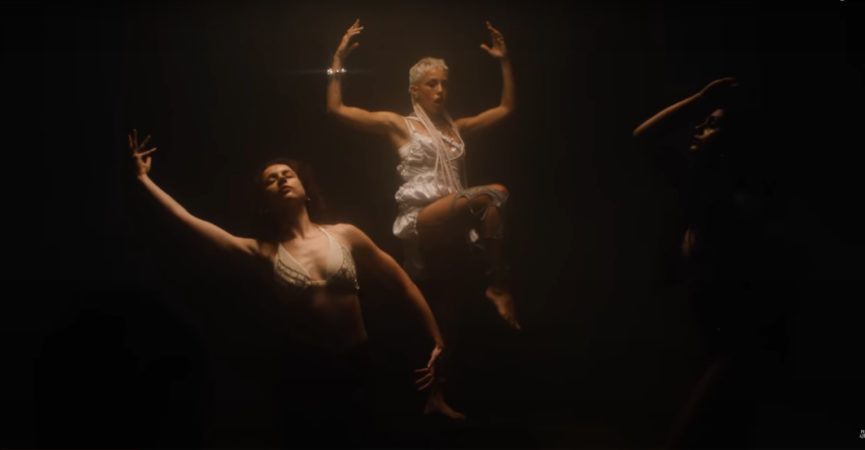
Jamala’s victory at the Eurovision with her song “1944” kick-starts the media to take an interest in the tragic fate of the Crimean Tatars. We are once again talking about the deportation of 200,000 Tatars by Stalin and the persecutions that rage even today against them. We recall that the Russians use the same methods of intimidation as in the North Caucasus. Arrests, torture, disappearances and murders are no longer rare in the Crimea. The Mejlis council was dissolved. The expression “hybrid” deportation is used with a reference to “Putin’s hybrid war” in Eastern Ukraine. 15,000 Tatars have sought refuge in the Ukraine. In Crimea, some Tatars are prosecuted for links to Islamic terrorism because they belong to the Pan-Islamic movement, Hizb ut-Tahrir, banned in Russia since 2004 but still legal in Ukraine. Even if some Tatars try to work with the new Russian administration (the Kyrym movement), the great majority of Tatars perceive Russians as invaders and remain confident that Crimea will re-join Ukraine someday.
A year later, The Economist writes another article on the Eurovision and its consequences for Russian-Ukrainian relations. By banning the disabled Russian contestant from Ukraine – because the singer has contravened Ukrainian law which refuses right of entry to any person who promotes the Crimea’s annexation to the Russian Federation – Ukraine has caused a diplomatic row. In fact, this ban suits Russian propaganda which portrays Ukrainians as monsters for banning a disabled person from singing in Kyiv. The Economistsays ironically that this Russian version of events is so much easier to report than to speak the truth: that Ukrainians do not like to see their country being torn apart by a stronger neighbour.
Similarly, this small diplomatic storm is convenient for the government in Kyiv by diverting attention from the failures of the Revolution.
HISTORICAL MEMORY LAWS
The British press call them “decommunisation” laws. The French media were particularly interested in what they call ‘les lois mémorielles” which they reject in their entirety because the new laws make no distinction between Nazism and Bolshevism. In Causeur, André Markowicz says with sarcasm that Ukraine is a western and anti-Russian democracy in the making where, paradoxically, any questioning of the new historical “truth” is punishable by imprisonment. It makes no sense that The Soviet Union and Nazi Germany are set side by side. According to Markowicz, there was no Treblinka under Stalin. One can’t deny the Holodomor, however it was not a genocide against the Ukrainian people, but a response to a peasant revolt fighting collectivization. According to Causeur, these laws are made to divert attention from the economic crisis and the misery of the population resulting from Angela Merkel’s economic demands. One must find a common enemy. Thus we are witnessing the absolute triumph of Putin, a Russian nationalist, who does exactly the same thing, but on a far larger scale.
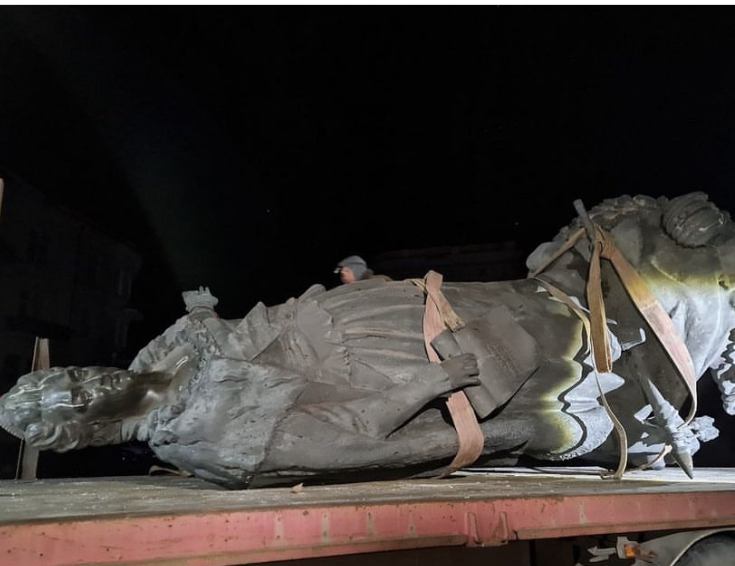
Mediapart, whose political views are the polar opposite of those of Causeur, is also very critical of these new Historical Memory Laws, of which Odesa has become the symbol, with the statue of Darth Vader replacing the one of Lenin. It seems that the Ukrainian historiography that has been around for a very long time in Western Ukraine – which makes not the slightest distinction between the criminal character of the Nazi and Soviet regimes – has now reached Kyiv. Ukraine is following in the same footsteps as the countries of central Europe in the 1990s. One could say that the remaining Ukrainians who are still nostalgic for the USSR, people who gave their best years to the former Union, are now insignificant; they represent mere pensioners. For Laurent Geslin and Sébastien Gobert, the unification of the Ukrainian state and the Ukrainization of national history have been accelerated by Vladimir Putin’s hybrid war in the Donbas.
Mediapart writes that Ukraine has always had an inferiority complex in the face of Russian historiography. In a country ravaged by an endless economic crisis, bled by endemic corruption and a predatory political class, the decommunisation laws seem to be a way of distracting Ukrainians. This issue about the de-sovietisation laws is bound to get a reaction.
In conclusion, the question arises whether the invention of a new mythology has the power to bring the citizens of Ukraine together. According to Mediapart, Ukrainian identity already exists, in both Ukrainian and Russian speakers. It is trade, prosperity and welfare that will contribute to a new way of living together.
THE BAN ON RUSSIAN SOCIAL NETWORKS
The British condemn the ban on Russian social networks in Ukraine. This populist measure is an obstacle to freedom of expression because Russian platforms such as VKontact or Odnoklassniki do not threaten the Ukrainian state. On the contrary, VKontact made it possible to circulate the photos proving the Russian military presence in Ukraine. These networks also allow communication between people living on both sides of the front. It is an ineffective anti-Russian measure which helps the President, whose popularity is waning, to prepare for his 2019 election campaign. In France, Le Courrier International publishes an article from Ekonomitchna Pravda in which concerns are raised about the emergence in Ukraine of a cyber dictatorship, like in China, North Korea and Russia, although the purpose of thwarting Russian propaganda is acknowledged.
CORRUPTION
In an article dated 25th May 2017, The Economist points out that Ukraine is one of the most corrupt countries in the former Soviet Union and that fraud is endemic especially in the supply chain of ministries and national companies. However, the British magazine mentions some success in the fight against corruption in the Ministry of Health when the government called on the services of a British agency to supply them with medicines, despite the ill will of some officials. The department thus cut their spending by 38% compared to the previous year.
With the conflict re-emerging in the Donbas, the fight against corruption is likely to decline. Already some politicians are trying to discredit the Anti-corruption Action Centre. Le Figaro and Le Monde mention the killings of journalist Cheremet and former Russian deputy Denis Voronenkov in Kyiv, demonstrating that Ukraine is still a country plagued by the Ukrainian and Russian mafias and secret agents.
KYIV: A NEW CULTURAL AND POLITICAL CENTRE IN EUROPE
To end on a positive note, on 31st August 2016, The Guardian publishes an article on the cultural renewal taking place in Kyiv entitled “Kiev’s new revolution: young Ukrainians spur cultural revival amid the conflict”. According to the English newspaper, Kyiv has become a cultural breeding ground where artistic creativity and entrepreneurship are flourishing. The young Kievans are no longer afraid, they feel liberated and this is the biggest victory of the Post-Maidan era. As for the French newspaper Libération, Kyiv has become the new Mecca for the Russian opposition with the arrival of many Russian opponents and the opening of the Free Russia House. However, Libération points out that many Ukrainians want complete separation from Russia.
CONCLUSION
It can be said that the French and British media have largely covered the tragic events in Ukraine. Even though many have fallen into the trap of confusing the Russian population with the Russian-speaking population – a confusion caused by Russian propaganda to give an image of a fragile country in search of a national identity – British and French newspapers remained overall mostly neutral. Ukraine is depicted as a victim of Russian aggression which aims to contain the advance of Western and democratic values in the former Soviet Union. The Maidan movement is perceived both as a pro-European movement and a popular revolt against the oligarchic system, leaving some journalists sceptical with regard to the capacity and political will of opposition leaders to reform the country. Eurosceptic newspapers dwelt at length on the presence of far-right factions and nationalists from Western Ukraine on Maidan Square.
Media coverage was very extensive for five specific events:
1) The refusal of President Yunakovych to sign the economic association with the European Union.
2) The Maidan Square massacre and the regime fall in February 2014.
3) The annexation of Crimea by Russia in March 2014
4) The destruction of the Malaysian Airlines airliner in July 2014.
5) Jamala’s victory at the Eurovision.
However Brexit, the failed coup d’état in Turkey, the war in Syria, the election of Donald Trump, uncertainty regarding the French presidential elections and also public fatigue in relation to Ukraine have relegated the Donbas conflict to just another minor news item.
On the whole, the left-wing media have sympathized with the Ukrainian people, while the right-wing press, more Eurosceptic and critical of Islam (especially in France), regrets that the West has sacrificed its partnership with Russia, a power seen as indispensable in the fight against jihadists. Indeed the right-wing press would be in favour of lifting economic sanctions that hinder British finance, French agriculture and lucrative contracts for the Anglo-French armaments industry. Finally, in France there is a certain Russian lobby made up of intellectuals and nationalist politicians who romanticize Franco-Russian relations. The newspaper Le Parisien devoted an article to it entitled: “In France, pro-Russians are recruited on the left as on the right”.
Nevertheless, Emmanuel Macron’s arrival in power and the possibility of the failure of Brexit are two favourable developments for Ukraine.
London, June 2017.