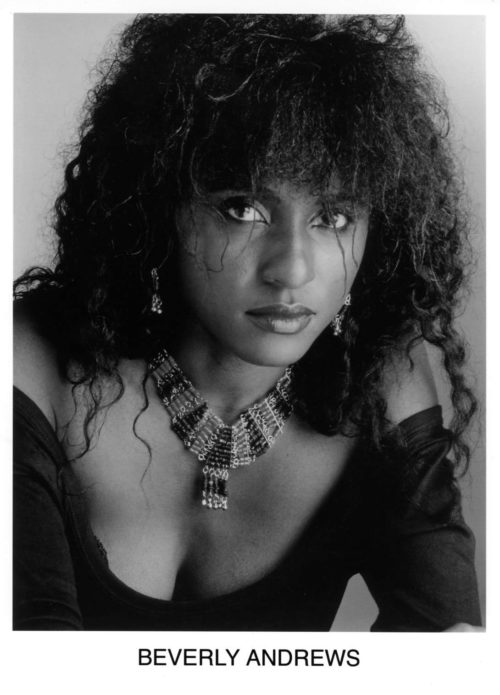
BEVERLY ANDREWS, A WARRIOR ARTIST FOR DIVERSITY IN UNITY
Interviewed by Pierre Scordia & Annie Clein – 25th May 2016
What path led you to your career as an actress, playwright and documentary filmmaker?
I think growing up in Detroit, in a racially divided city and by extension a racially divided country, I always felt the arts could act as a really important bridge between races for us to learn to open our hearts to each other. I think it’s very easy to fear or hate someone you don’t really know. It’s much harder to do that once you understand something about their lives and for me that’s what the arts can do, take us into each other’s lives.
What motivates you to begin a play?
That’s such a good question since it’s often different for each play. It can be a news item I have either read or seen which sparks my imagination. An example of this was a documentary on the life of Doctor John Henrik Clark. It was so random the fact that I saw this documentary at all, since I only managed to catch it because my mom was late picking me up for a lunch date and I just switched on the television something I normally wouldn’t do during the day. But once I did I was fascinated to see this amazing African American historian who is now widely seen as being responsible for the advent of African History studies at American universities. During the programme he spoke so eloquently about how badly taught African history was at that time or simply ignored by most academic bodies and how so many historical facts are not known, such as the fact that there were several African emperors of Rome as well as at least three African Popes. I was shocked, not so much about this revelation but more that I didn’t know any of this. And to make a long story short, I was able to get research, development money from the Arts Council of England to work with a dramaturge from Yale on a play about the first African emperor of Rome, Septimius Severus, my play is simply called Septimus. The play has gone on to be shortlisted for the Alfred Fagon award and I’m hoping to eventually get a full production of it, I am also now working on the screenplay. I just think if I hadn’t been home that day and hadn’t seen the programme, I never would have written this play.
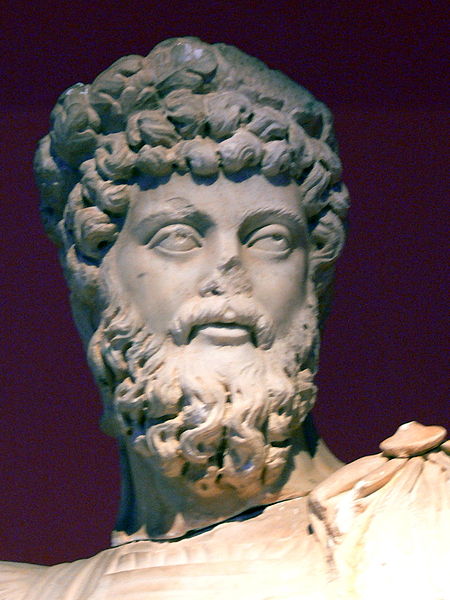
Septimus Severus
Do you prefer to write or to act?
That’s a hard question to answer, since I love doing all three, acting, writing and directing. I think if things are going well then it’s amazing but when they are going badly I would have to say directing is the worst since of course the buck stops with you and you have to sort out whatever problem there is and that can be a nightmare!!
What sort of plays do you write?
I write a lot of historical plays. I love looking back at history since I think it continues to have an impact on our lives now.
What do you find is the most difficult step when you write a play?
I think the most difficult step is simply just starting it! The first quarter can be a nightmare if you still haven’t actually found your story, but alternatively once you have a real vision for your piece and its working, then the writing just flies and that’s when it is the best feeling in the world.
What research do you undertake whilst writing your plays? Do you travel to the countries that you portray?
I try to do as much research as I possibly can, that can include reading about the time the play is set or of course if I’m writing about a historical figure to find out as much as I can about their lives. I wrote a musical about one of the African American stars of what was called the parallel cinema in America in the 1920’s. It’s called the Coloured Valentino and it looks at the life of Lorenzo Tucker who was called the Coloured Valentino because Tucker, although African American had an uncanny resemblance to Rudolph Valentino. It’s also called the Coloured Valentino because it was so difficult at the time to see black artists as unique in their own right, rather then as sepia copies of white originals. Researching that play was such an extraordinary experience since I had no idea that there had been a black independent cinema in the 1920’s, nor the impact that those films had on both the black and white community at the time. So much of the success in film and television we have now is down to the doors they opened for us.
What causes are you supporting in your plays?
I try when I write to write about people rather then causes. I think once an audience feels like they are being lectured they will switch off. Now having said that I do write plays to highlight certain issues I feel strongly about and my play Annawon’s Story was written to look at the plight of Native American military veterans who reportedly often return from tours of duty with some of the worst cases of post traumatic stress, possibly caused by fighting for an army which has done so much to destroy native culture. I have always said if the play became a success I would donate some of the revenues to veteran charities. Governments declare wars, often for spurious motives and then fail to support those who fight them. People often enlist because they don’t have any other employment options.
What do you intend your audience to experience during one of your plays?
I think if they can see the world from a completely different perspective then I would have achieved what I set out to do.
Are you angry at all the injustice present in this world?
Yes most definitely. But I’m also a Buddhist so I try not to get lost in the anger but to use it constructively. If you simply feel angry then you can so easily slip into despair. But if you determine to be the change you want to see then that anger can be used in a much more constructive way. Has Nichiren Buddhists we are encouraged to create value so I try to channel my anger in a way that creates value.
Do you believe that the Arts can play a part in making the world a better place?
I definitely feel that the arts can change the world for the better. I mean look at what happened in the wake of Prince’s death, you had spontaneous street parties across America, where people who were gay, straight, transgender, black and white all coming together to simply dance the night away as their own way of celebrating his life. I thought that was such a vivid example of how art can unify all of us.
Do you think being born as an African-American (with some native American roots) made you more sensitive towards any form of discrimination or injustice?
I think it definitely means that you can’t ignore what’s going on around you, since you can so easily find yourself the target of someone’s misguided hatred. But I also think its so important to not become a prisoner of this as well and its crucial for me to not see the injustice directed at say African Americans (and native Americans) unique. Throughout the world in every country you care to name, minority communities face exactly the same thing. So instead of feeling the victim it’s important to feel a real sense of mission to change this. And when I look at things from that perspective I feel really empowered.
This year, one of your plays has been selected for a festival in New York; do you believe it is harder for artists to survive in New York rather than in London?
I think its pretty hard to survive as an artist in both countries although saying that in Europe there is a lot more public sponsorship for the arts, there is some in the States as well but its much, much harder to get it since there are so many other people competing for exactly the same funding.
You made a few films lately. One is about transgender people in India. What can you tell us about transgender and religion in India?
As a solo director I have only directed one film so far and it’s about the director of the amazing Arcola Theatre. It’s an extraordinary story really of one man simply pursuing his vision and his unwavering belief in the power of theatre to change our lives. His name is Mehmet Ergen and he arrived in England with no money and very little English but was determined to establish his own theatre. That was over twenty years ago and he now is the artistic director for the award winning Arcola Theatre, which has become one of the most important theatres in Europe I feel, and he now has major stars keen to work there.
The documentary focuses on the time five years ago when they lost their original home and had to pursue a desperate fight to secure their new one. Fortunately it all had a happy ending and now they are thriving. The film is called “I am Going to Make a Miracle” and the score was composed and performed by my sister Gwen Ferguson. I’m really proud of it and it’s been shown at festivals around the world. Most recently in Israel, in Nazareth at the Near Nazareth film festival. I just thought that was a real reminder of how art can build bridges since here is a film celebrating the achievements of a man from a Muslim country being selected for a festival in Israel. Maybe that’s how we achieve peace through these small steps.
The new project I’m working on is a documentary about the transgender community in India and a famous festival they have in Koovagam which celebrates their mythic origins since during the festival they re-enact their marriage to a god. It’s such a contrast to the daily reality of their lives which is in many situations a life lived on the margins of society. I so want to make this film since I really want to do something which allows their voices to be heard!!!
You have lived in many countries: United States, Canada, France and now the UK. What advice would you give to someone who wants to go and work in a foreign country?
Do your research. You may find that you have a fantasy of a country that does not in any way connect to the reality of living there. On the other hand I would also say have an open mind. A friend of mine who is of Jamaican parentage has recently moved to Berlin because of work. And although he had never thought of working and living in Germany he is having the time of his life. He just loves it!!! So that’s a lesson as well about being open, you might find where you think you should be living isn’t really right for you but somewhere else just might be.
As an American woman in London who has also lived in Paris, what do you think of the Brexit referendum?
Its a little scary I have to say, since it seems to be unleashing a wave of nationalism which is a bit unnerving for me to witness as an immigrant living here. I have always loved the idea of a united Europe and I have to say this idea of a possible exit from the EU I feel taps into a rise we’re seeing throughout Europe of political populism which lets make no mistake about this ultimately lead to two world wars. After all the whole idea behind the EU was to prevent this kind of cataclysm from ever happening again. And I fear we have now forgotten this very important lesson. I am though an optimist, which probably again stems from my Buddhist beliefs, and I feel that people will walk to the abyss but hopefully at the very last moment turn back just in time.
Are you scared of the recent upsurge in populism and nationalism trends? Putin in Russia, Orban in Hungary, Le Pen in France, Farage in the UK, far rights movements in Austria, Poland, Scandinavia, Greece… Do you think Trump is any different?
And of course Trump in America, Marie Le Pen in France and Putin in Russia tap into people’s fears. A fear of losing our homes, a fear of the other, a fear of financial insecurity etc. They do this of course not for the welfare of others but of for their own self interest and I think we all have a responsibility to not let ourselves and others be seduced by this poison. Billy Crystal said so eloquently at Muhammad Ali’s funeral “this is a time to build bridges, not walls”.
What is your secret for being so energetic and optimistic?
Being Buddhist of course. I learn in this practice to not focus on what is dark in individuals but to always try to look for the light, their Buddhahood. Its there but you do have to look for it.