Chronicle of a Revolution: Ukraine 2013-2013
1. Media coverage of the Ukrainian crisis in France and Great Britain
By Pierre Scordia
Introduction
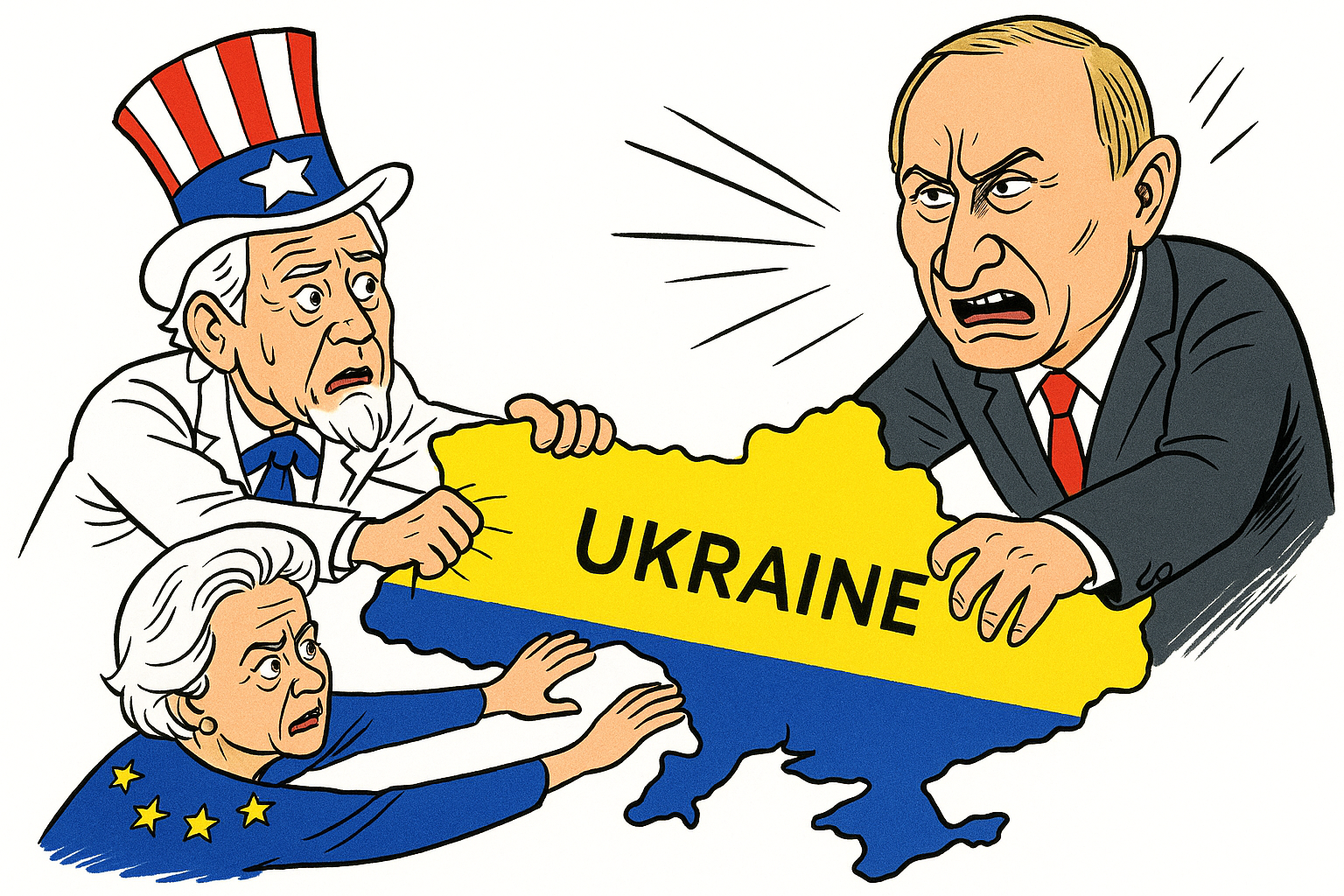
The Ukrainian Revolution, followed by Russian aggression, was met with a degree of scepticism in sections of the French and British press. Nevertheless, the vast majority of newspapers, as well as the governments of both countries, unequivocally condemned Russia’s annexation of Crimea and its military support for separatist forces in Donbas. However, certain outlets within the French and British media landscape proved vulnerable to misinformation fuelled by Russian propaganda. Some journalists contributed to a distorted understanding of the conflict by oversimplifying its complexities and implying a fictitious political divide between Ukrainians and the Russophone population — a regrettable confusion between Russian-speaking Ukrainian citizens and Ukrainians of Russian ethnic origin.
The portrayal of the Ukrainian crisis in Western media has already been the subject of academic inquiry. To contribute a fresh perspective, this study focuses on the coverage provided by The Economist, the renowned British magazine which articulates, with notable consistency, the Western liberal interpretation of the Ukrainian conflict. In addition, we examined various British and French newspapers and online media outlets spanning the period from 2013 to 2017.
Our research is structured around eleven key events that marked the evolution of the crisis: the Trade War of 2013, the February Revolution, the annexation of Crimea, the tragic fire in Odessa, the election of Petro Poroshenko, the downing of the Malaysian airliner, the formation of the new Rada assembly, the emergence of the self-proclaimed republics in Donbas, the Eurovision diplomatic standoff between Ukraine and Russia, the adoption of decommunisation laws, and, finally, Ukraine’s ban on Russian social media platforms.
MEDIA COVERAGE OF THE UKRAINIAN CRISIS IN BRITAIN & FRANCE
The British media have shown particular interest in Vladimir Putin’s political strategy, his authoritarian governance, and his formidable propaganda apparatus. It could be argued that their portrayal of the Russian president oscillates between a degree of reluctant admiration and profound revulsion.
When it comes to Ukraine, however, there exists a fundamental misconception: the country is often depicted as divided along political lines that supposedly mirror its linguistic divide. Odessa, for instance, is frequently portrayed as a city riven by deep divisions, whereas opinion polls have consistently shown, from the very outset of the conflict, that separatist sentiment has only ever attracted marginal support within the population. This misrepresentation is largely the result of the pervasive influence of Vladimir Putin’s narrative, which conflates Russian-speaking Ukrainians with ethnic Russians.
Numerous experts — among them Laas Leivat, Timothy Garton Ash, Howard Arnos — have highlighted how European media outlets, particularly in Germany, Britain, and France, have uncritically adopted terminology drawn directly from Kremlin propaganda. Terms such as separatists or pro-Russian rebels are used, framing the conflict as a form of civil war, when in reality it is more accurately described as a confrontation orchestrated and sustained by Russia. Conversely, Western media have largely avoided the vocabulary favoured by the Ukrainian government, including designations such as terrorists or references to anti-terrorist operations.
Both British and French journalists tend to favour neutral terms such as the Ukrainian crisis when referring to the armed conflict in Donbas. This linguistic caution reflects the fact that, from an official standpoint — whether in Kyiv or Moscow — no formal state of war exists between Ukraine and Russia. The Independent, for example, has lamented the reluctance of Western leaders to describe the situation as an outright invasion, opting instead for terms like aggression or incursion.
form-idea.com London. 20/01/2020.
Read the article in French | Lire cet article en français
Chronicle of a Revolution: Ukraine 2013-2017
2. The beginning of the political crisis
3. The February Revolution of 2014
5. Odessa, the Pearl of the Black Sea at stake
6. Petro Poroshenko: the Providential man?
7. Russian roulette in Ukrainian sky | Flight MH17
8. Parliament elections & the power of Western regions
9. War in Donbas | Welcome to Absurdland!
10. The Eurovision: a diplomatic row
11. Failures and Successes of the Ukrainian Revolution
12. Russian propaganda

I ran across search engines and find this blog that fulfill my needs. There is a thing I do not agree but It doesnt matter since I think it does not hurt the whole content.