Eurovision: A Diplomatic Row

from Chronicle of a Revolution: Ukraine 2013–2017

British Media and The Economist‘s Coverage

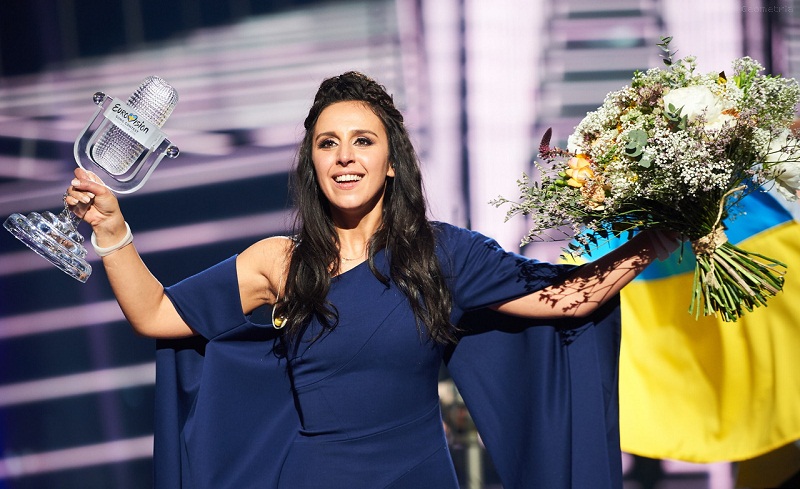
Jamala’s victory at the Eurovision with her song “1944”

Jamala’s victory at the 2016 Eurovision Song Contest with her evocative song “1944” served as a catalyst for renewed media attention on the historical and contemporary plight of the Crimean Tatars. The song, which references the forced deportation of approximately 200,000 Tatars under Stalin’s regime, brought this collective trauma back into the international spotlight. In doing so, it also foregrounded ongoing human rights violations against the Tatar community in post-annexation Crimea.

The contest’s political resonance prompted commentators to draw comparisons between the current methods of repression employed by Russian authorities in Crimea and those historically utilized in the North Caucasus. Reports of arbitrary arrests, systemic torture, enforced disappearances, and extrajudicial killings indicate a pattern of state-sponsored intimidation and control. The dissolution of the Mejlis—the principal representative body of the Crimean Tatars—by Russian authorities further illustrates the systematic erosion of minority political representation and civil liberties.

Scholars and journalists alike have adopted the term “hybrid deportation” to describe these developments, echoing the broader conceptual framework of “hybrid warfare” employed to characterize Russia’s multifaceted strategy in Eastern Ukraine. According to estimates, approximately 15,000 Crimean Tatars have sought asylum or resettlement in mainland Ukraine, citing political persecution and insecurity.

In occupied Crimea, the Russian state has prosecuted some Tatars under the pretext of counterterrorism, often citing alleged affiliations with Hizb ut-Tahrir, a pan-Islamic organization deemed illegal in Russia since 2004 but still legal within Ukraine. These prosecutions are widely regarded by human rights organizations as politically motivated and lacking in due process.

While a marginal faction of the Tatar population has engaged with the Russian administration through platforms such as the Kyrym movement, the overwhelming majority continue to view the Russian presence as an illegal occupation. Their collective identity remains strongly tied to Ukrainian statehood, and many within the community continue to express the conviction that Crimea will eventually be reintegrated into Ukraine.

Eurovision in Kyiv: A diplomatic row

One year later, The Economist revisited the Eurovision Song Contest, analyzing its continued political ramifications within the context of Russian-Ukrainian relations. The focal point of the controversy was Ukraine’s decision to deny entry to Russia’s chosen contestant, a disabled singer, on the grounds that she had violated Ukrainian law by performing in Crimea following its annexation—a legal breach under Ukrainian statutes that prohibit entry to individuals who endorse or legitimize the Russian occupation.

This decision provoked a diplomatic dispute and offered fertile ground for Russian state media, which framed the incident as an act of inhumane discrimination. The portrayal of Ukraine as a state so vindictive as to bar a disabled artist from participating in an international cultural event served to bolster Russia’s narrative of Ukrainian hostility and moral hypocrisy. As The Economist noted with pointed irony, this simplified account was far more convenient to disseminate than the more nuanced truth: that Ukrainians are grappling with the trauma of territorial dismemberment at the hands of a more powerful adversary.

Simultaneously, the incident provided short-term political utility for the Ukrainian government. The international media attention and nationalist sentiment it stirred served as a temporary distraction from the growing public disillusionment with the outcomes of the 2014 Revolution and the government’s perceived shortcomings in delivering reform and stability.

FORM-Idea London, 23rd January 2020 | Read this article in French

Main events of the Ukrainian Revolution

1. Media coverage of the Ukrainian crisis in France and Great Britain

2. The beginning of the political crisis

3. The February Revolution of 2014

4. The annexation of Crimea 

5. Odessa, the Pearl of the Black Sea at stake.

6. Petro Poroshenko: the Providential man?

7. Russian roulette in Ukrainian sky | Flight MH17

8. Parliament elections & the power of Western regions

9. War in Donbas | Welcome to Absurdland! 

10. The Eurovision: a diplomatic row

11. Failures and Successes of the Ukrainian Revolution

12. Russian Propaganda

Leave a Reply

Your email address will not be published. Required fields are marked *