By Pierre Scordia
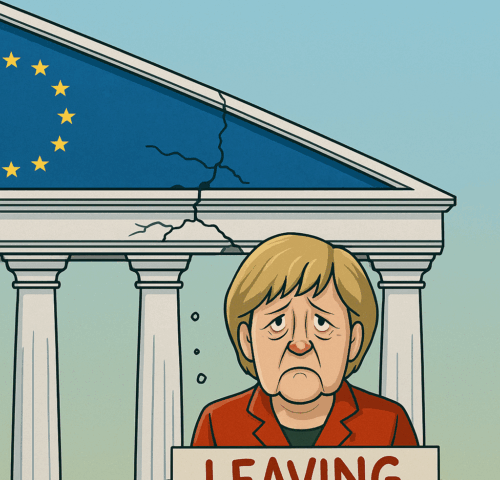
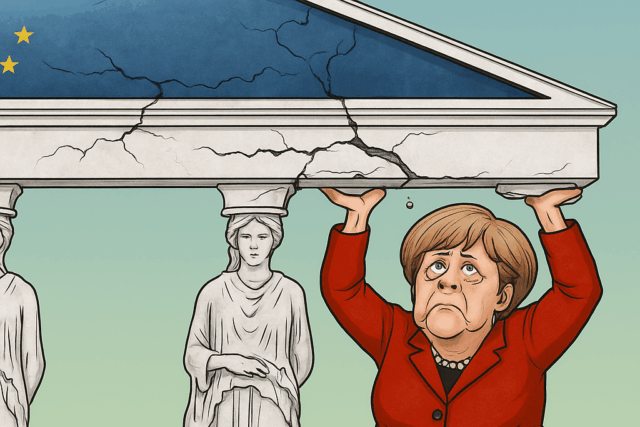
Angela Merkel is generally perceived as an exceptional leader; a cautious, measured and pragmatic politician who has managed to maintain peace and prosperity in Europe. The woman who apparently saved the Euro and stood up to both Donald Trump and Vladimir Putin has recently received the highest decoration in France: the “Grand’Croix[1]”.
However, if one looks more deeply into her leadership and politics, a different picture emerges. It is no exaggeration to say that she was responsible for a harsh austerity that impoverished many Southern European countries and accelerated their deindustrialisation. She seriously considered expelling Greece from the Eurozone as a punishment. She incited mass migration into Europe with serious consequences for the European political chessboard. She then took it upon herself to negotiate an agreement with Erdoğan without first consulting her EU partners. Finally, she has consistently facilitated dialogue and trade agreements with authoritarian and totalitarian regimes: Turkey, Russia, China and Belarus; countries that promote anti-European values.
As a statesman or stateswoman, it is occasionally pragmatic and necessary to resort to Realpolitik – and temporarily set aside democratic principles, when the political and economic stakes are too high. It seems that for Merkel, more often than not, Realpolitik meant negotiating to facilitate Germany’s trade surplus.
THE EURO CRISIS
Let’s go back to the Greek debt crisis, which began in 2008. The German finance minister at that time, Wolfgang Schäuble, was uncompromising with the Greeks, humiliating them and pushing them little by little out of the Eurozone. It is a fact that Athens lied about the true state of the nation’s finances – heeding advice they received from Goldman Sachs – but the Germans were not unaware of this subterfuge when they accepted Greece into the Eurozone. At the time, the chance of making a profit made Germany unwilling to turn down a new member. It is estimated that Germany gained more than a billion eurosas a result of the Greek debt crisis.
Furthermore, the lack of German solidarity towards Greece triggered a domino effect. Indeed, it gave the message to speculators that Germany wouldn’t back the Euro at all costs. Countries with weaker finances saw their interest rates skyrocketing: Ireland, Portugal, Spain, Cyprus and Italy. Expensive interest on debt combined with austerity have contributed to a serious social crisis in the so-called spendthrift countries, to a point of creating resentment towards Germany throughout the EU. Even the rather Germanophile Spaniards began to develop anti-German feeling in 2012. Merkel’s procrastination has cost southern Europe dearly.
THE MIGRANT CRISIS
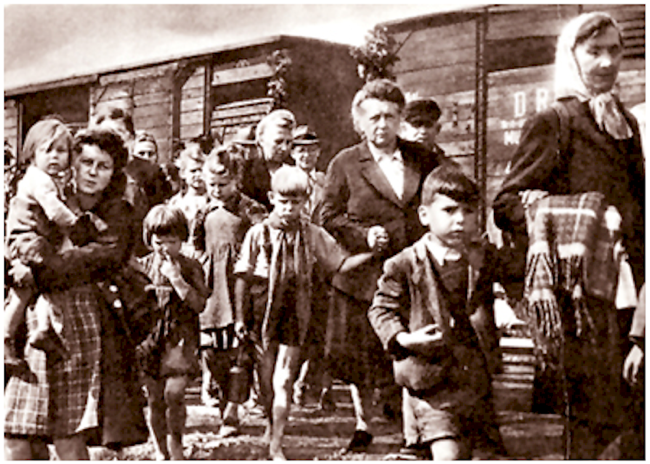
When, in 2015, Angela Merkel opened her country to migrants with her famous sentence, “We can do it!”, it was interpreted as an invitation for many young Africans, Arabs and Asians, in their quest for a better future, to undertake the perilous journey towards the gates of the European El Dorado. It seemed that the German Chancellor hadn’t thought through the consequences of this momentous decision. Though we can rejoice that so many Syrian refugees were granted an opportunity to build a new life after having fled a war zone, was this gesture truly made in a burst of compassion?
In 2015, the Prognos Institute estimated that Germany needed 1.8 million extra workers for its economy. It is therefore perhaps not so surprising that the country was able to rapidly integrate one million migrants into its labour market. Seen in this light, Merkel’s decision to welcome migrants doesn’t appear to be entirely philanthropic.
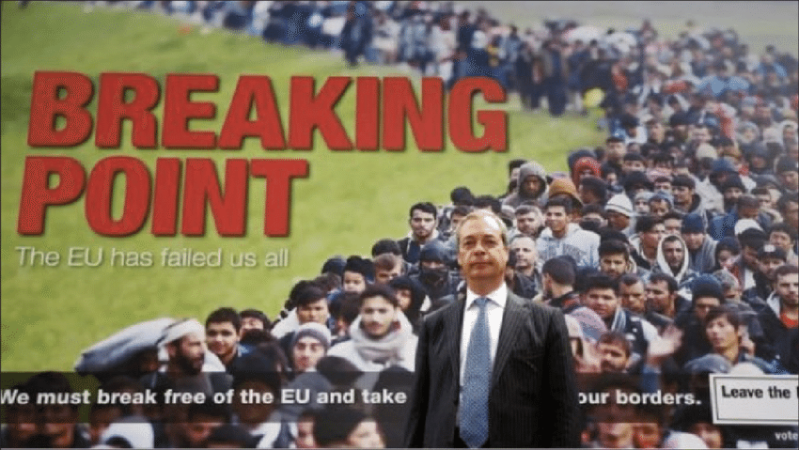
A few months later, after having seen her popularity nosedive in Germany, Merkel changed tack and asked for a fair distribution of migrants throughout the Union, in the name of European solidarity. Some European countries had neither the means nor the inclination to host predominantly Muslim settlers. This pressure led to the rise of conservative and far-right movements on the European political scene. Worse still, Merkel’s risky bet is undoubtedly responsible for Brexit. A few days before the UK referendum in June 2016, large billboards appeared, showing a horde of migrants on their way to Europe, with a powerful slogan: “Breaking Point – The EU has failed us all”. This striking image, commissioned by the infamous Nigel Farage, had a dramatic impact on the British vote. Many voters conflated the open borders of the Schengen Area with free movement for European workers [2].
Even though it’s undeniable that the Brits have been difficult and unreliable partners in the EU, their departure is surely regrettable. Recently, we have witnessed how a dispute over fishing rapidly escalated between the French and the British. More worrying still, a conflict on the Irish border could arise at any time. Due to Brexit, Europe has emerged weakened and unbalanced, with growing German influence in Brussels.
CONCESSIONS TO TURKEY
Not long after her decision on migration, the German Chancellor became acutely aware of the growing discontent in Germany. Thus, in 2016 she directly negotiated an agreement with Recep Tayyip Erdoğan, prostrating herself before the great Turk, entreating him to halt the flow of hundreds of thousands of Syrians and others across the Aegean into the EU. He in turn did not hesitate to blackmail her with the threat of sending three million refugees to Europe if the EU did not grant him up to €6 billion in health, education, food and infrastructure assistance which, by June 2021 had increased by an extra €3.5 billion to help in hosting Syrian refugees.
It is thus no wonder that Berlin has so far refused to implement sanctions against Ankara regarding the non-respect of human rights in Turkey, for fear that Erdoğan opens the floodgates of emigration. In addition, Germany prefers to turn a blind eye to Greek and Cypriot concerns over Turkey’s military expansionism in the Aegean Sea.
CONCESSIONS TO RUSSIA
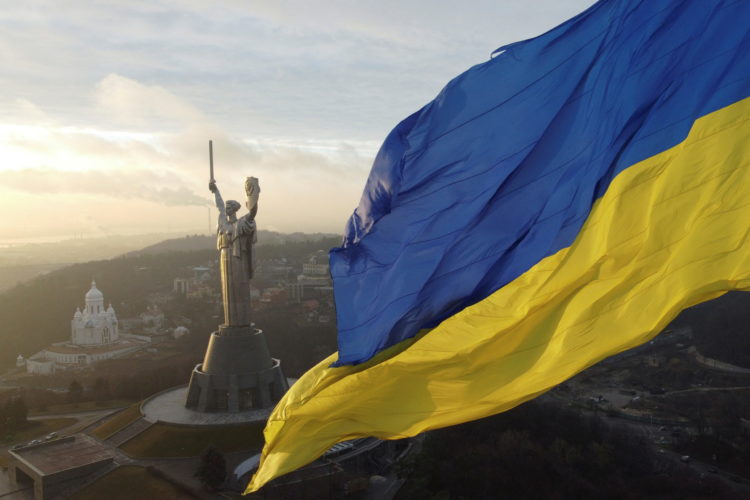
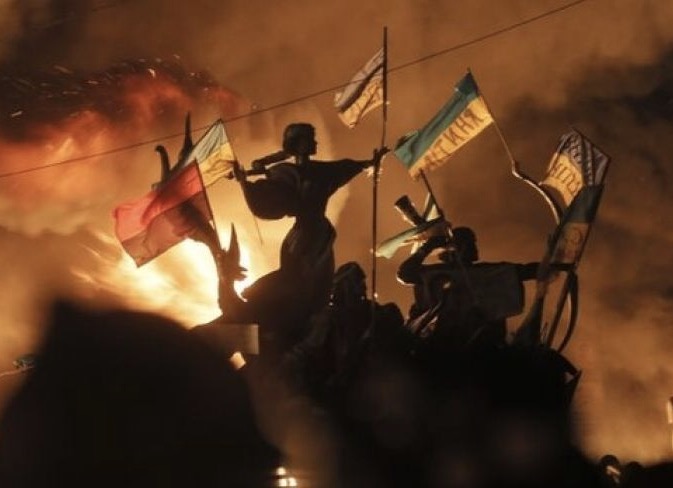
With regard to Ukraine, although Merkel condemned Russia’s annexation of Crimea, she was reluctant to impose meaningful economic and financial sanctions. Ultimately, it was the destruction of the Malaysian airliner over Donbass by a Russian missile – which killed all 283 passengers and 15 crew – that at last convinced Germany and the rest of the EU of the necessity to punish Russian for its meddling in Ukrainian affairs [3].
Germany has backed only those sanctions that do not go against key economic interests. Despite intense US pressure, Berlin has refused to give up on Nord Stream 2, a pipeline that will pass through the Baltic Sea and will deprive Ukraine of a substantial income and its only political leverage on Russia. Thus, the buffer state finds itself in a yet more vulnerable situation. The American historian Timothy Snyder maintains that the greatest danger to Kyiv comes from being caught between the remnants of German nationalism, still present in mainstream parties in Germany, and Russian nationalism with its fascist nature and conservative values.
CONCESSIONS TO BELARUS
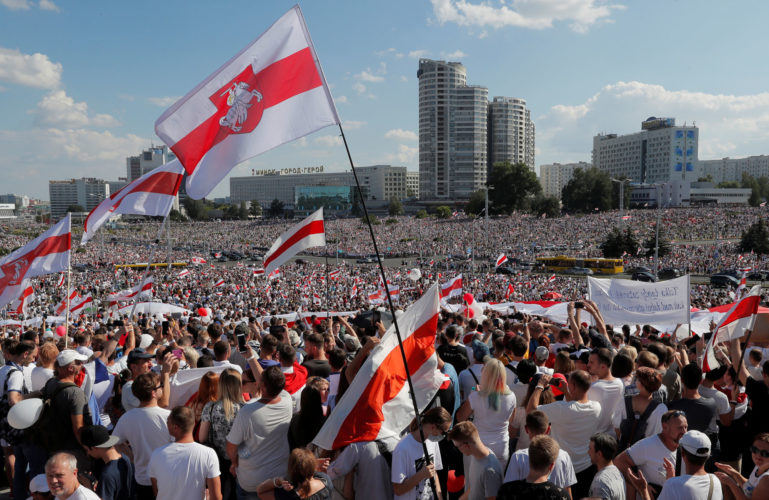
In November 2021, Merkel took the liberty to call the Belarusian dictator Lukashenko, hoping to put a stop to tensions on the Polish-Belarussian border, a political initiative deplored by the Polish and Baltic governments and the Belarusian opposition. It seems that Lukashenko won his risky bet: to force bilateral negotiations with his regime. One might have expected Germany to take a harder line against the despicable Belarusian government, one of the worst regimes of modern times. Was Merkel’s aim to aid Poland and the Baltic States or rather to prevent a new wave of migrants in Germany?
MERKEL: CHAMPION OF GERMAN INTERESTS
Without a doubt, the Chancellor has an impressive record in defending German interests, but it would be wrong to conclude that Europe is indebted to her. Though her government accepted a collective debt following the pandemic crisis in 2020, it was mainly to serve Germany’s long-term interests. A financial crisis in Italy coupled with anti-European sentiment would have threatened the Euro, the European project and, ultimately, German exports to the rest of Europe.
By denying David Cameron intra-European migratory concessions (to be used in exceptional circumstances), she unwittingly contributed to Brexit; by paying Turkey to contain migration flows, she allowed the Islamo-nationalist regime of Erdoğan to become even more bullish; by backing the Nord Stream 2 project, she has considerably weakened Ukraine, a Europhile and pro-western democracy; by negotiating directly with Lukashenko without the consent of Poland, Lithuania and Latvia, she has indirectly recognised the unelected Belarusian dictator. Merkel: not so pro-European after all.
form-idea.com London, 4th December 2021. Edited by Annie Clein.